3 Best Ways to Implement Credit Card Processing POS

To implement an effective credit card processing POS, start by choosing durable, user-friendly hardware that suits your transaction volume, whether it's a stationary or mobile system. You'll also need to integrate software that complements your hardware and meets specific business needs like inventory management, ensuring seamless operation and robust reporting for strategic decisions. Don't forget to enhance security by deploying strong encryption protocols, adding multi-factor authentication, and keeping software up to date. These steps not only streamline your operations but also protect sensitive data. With the right setup, you'll notice improvements in efficiency and security that can significantly impact your business success.

Choosing the Right Hardware

selecting appropriate hardware options

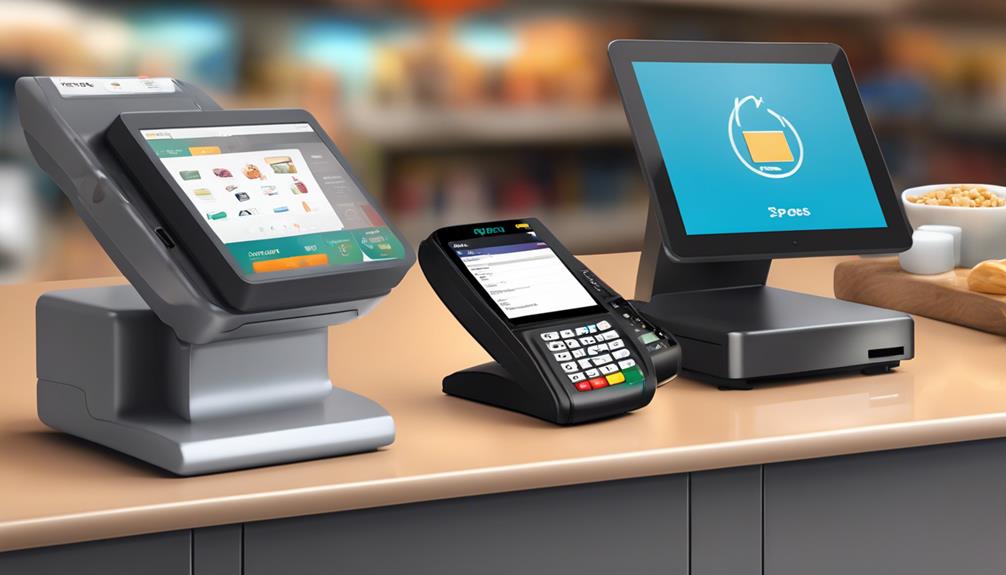
Selecting the appropriate hardware for your credit card processing POS system is crucial. It's not just about having any machine; it's about finding the right fit that enhances efficiency and aligns with your business needs. You're aiming for hardware that can handle the volume of transactions you expect, withstand daily wear and tear, and integrate seamlessly with your operational flow.

First, consider the durability of the POS terminals. If you're running a high-traffic retail store or a busy restaurant, you'll need devices that can endure constant use. Look for machines with solid build quality and good service warranties.

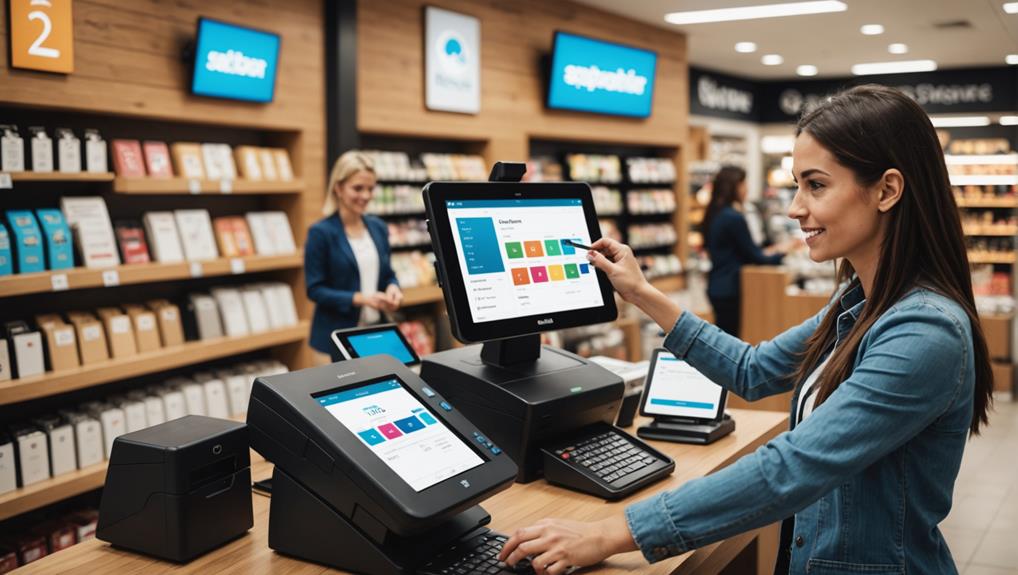
Next, think about usability. Your staff should be able to operate the POS system easily. Opt for hardware with intuitive interfaces and quick response times. This ensures a smoother checkout process, which in turn, improves customer experience.

You also need to decide between stationary and mobile POS systems. If your business requires flexibility, such as in a restaurant for tableside payments, mobile systems might be the better choice. Conversely, if transactions occur primarily at a counter, stationary terminals could be more suitable.

Integrating Software Solutions

Having chosen the right hardware for your POS system, the next step involves integrating software solutions that optimize your operations.

You'll find that the right software not only complements your hardware but also enhances your overall business efficiency. It's crucial to select a software that seamlessly syncs with your hardware and aligns with your business needs.

Start by assessing your specific requirements. Do you need a system that's tailored for inventory management, or are customer relationship features more critical to your operation?

Perhaps you're looking for software that offers robust reporting and analytics capabilities. Whatever your needs, there's a software solution out there for you.

Once you've pinpointed your requirements, you should look for software known for reliability and ease of use.

Consider options that offer a user-friendly interface and intuitive navigation. You don't want to waste time training staff on overly complex systems.

Integration is your next hurdle. Ensure the software you choose can integrate smoothly with your existing systems.

This might involve some technical assistance, so choose a provider that offers excellent customer support.

Enhancing Security Measures

strengthening protective protocols

With the integration of your software solutions well underway, it's crucial to turn your attention to enhancing security measures for your POS system. In today's digital age, safeguarding your customers' credit card information isn't just recommended; it's imperative.

Start by implementing strong encryption protocols such as SSL (Secure Sockets Layer) and TLS (Transport Layer Security) to ensure that all data transmitted between your POS and servers is protected against eavesdropping.

Next, consider adding multi-factor authentication (MFA) for accessing your POS system. This typically involves something you know (a password), something you have (a mobile device), and something you're (biometric verification). It's a robust barrier against unauthorized access.

Also, don't overlook the importance of regular software updates and patches. Cyber vulnerabilities are frequently discovered, and staying updated is your best defense.

Encourage or enforce strong, unique passwords among your staff, and consider using a password manager to keep track of them securely.

Lastly, conduct regular security audits and compliance checks to identify any potential weaknesses in your system. Addressing these proactively can save you from costly data breaches and maintain trust with your customers.

Frequently Asked Questions

What Are the Ongoing Costs Associated With POS Maintenance?

You'll face ongoing costs for POS maintenance, including software updates, hardware repairs, and technical support fees. Regularly budgeting for these expenses ensures your system remains functional and up-to-date with the latest technology.

Can POS Systems Operate During an Internet Outage?

You're wondering if POS systems can work during an internet outage. Yes, they can operate offline by storing transactions and processing them once connectivity is restored, ensuring you don't lose any sales.

How Does POS Integration Impact Return and Refund Processes?

POS integration streamlines your return and refund processes, making them faster and more accurate. You'll find it simpler to manage inventory and update sales records, ensuring a smoother experience for both you and your customers.

Are There Eco-Friendly POS Options Available?

Yes, you can find eco-friendly POS options that use less energy and sustainable materials. They're designed to reduce waste and minimize environmental impact. Look for suppliers focusing on green technology solutions.

How Can POS Systems Accommodate Seasonal Business Fluctuations?

You can adjust your POS system's scalability to handle seasonal spikes by integrating flexible features like cloud-based services and temporary terminals, ensuring you're equipped to manage both high and low sales periods efficiently.

Conclusion

You've made smart choices in selecting the right hardware, integrating cutting-edge software, and boosting security for your credit card processing POS system. These steps ensure efficiency and security in transactions, keeping both your business and your customers safe. Remember, staying current with technology and security updates is crucial. Keep evaluating your system's performance and make improvements as needed. Your proactive approach will not only enhance operations but also build trust with your customers. Keep up the great work!

Integrating Credit Card Processing With POS Systems

To integrate credit card processing with your POS system, you'll first want to ensure compatibility between your POS software and the credit card processor. Choose a processor that offers transparent fees and reliable customer support, confirming that your POS system supports the necessary payment protocols. Install a credit card reader that accommodates EMV and NFC technologies, and connect it to your POS terminal. After configuring the software with your merchant credentials, test the system thoroughly to catch any glitches. This setup not only speeds up transactions but also secures payment data. By streamlining this process, you can focus more on growing your business.

Understanding POS System Basics

fundamentals of pos systems

Why should you care about the basics of a POS (Point of Sale) system? Understanding these fundamentals can significantly streamline how your business operates daily. A POS system isn't just for ringing up sales; it's a comprehensive tool that manages inventory, processes transactions, and collects data to inform your business decisions.

You might think it's just about the hardware – scanners, registers, and receipt printers – but the software behind the scenes is what truly powers your operations. This software can track sales trends, manage stock levels, and even help with staff scheduling. It's all there at your fingertips, making it easier to run your business efficiently.

Moreover, a robust POS system enhances customer experience. It speeds up the checkout process, ensures pricing accuracy, and can offer personalized customer interactions based on purchase history.

You'll find that a good system is indispensable for keeping everything running smoothly, from front-end sales to back-office management.

Choosing the Right Credit Card Processor

Selecting the right credit card processor is crucial for the seamless integration of payment systems into your existing POS setup. You'll want to consider several factors to ensure you're making the best choice for your business.

Firstly, look at the fees associated with each processor. You're likely to encounter a mix of transaction fees, monthly fees, and possibly even setup fees.

It's essential to understand how these will affect your overall costs, especially based on your sales volume. Choosing a processor with transparent pricing structures can save you from unexpected expenses down the line.

Secondly, assess the level of customer support offered. If you run into issues, you'll need reliable and accessible support.

Check if support is available 24/7 and whether it's reachable via phone, email, or live chat.

Lastly, consider the processing speed. The quicker your transactions are processed, the better the experience for your customers.

Slow processing can lead to longer lines and frustrated customers, which might affect your business negatively.

Evaluating Compatibility Requirements

assessing compatibility criteria necessities

After choosing your credit card processor, it's crucial to evaluate the compatibility requirements with your current POS system. This step ensures that the new setup will work smoothly without requiring excessive modifications or additional investments.

Firstly, check if your POS system supports the payment protocols that your processor uses. You'll need to confirm that both systems can communicate effectively, using the same language or standards for transaction processing. Don't assume compatibility; verify it by consulting with both the POS provider and the card processor.

Next, look at the software requirements. Your POS software should be up-to-date and capable of integrating with the processing software. Sometimes, updates or patches are necessary to enable this integration. It's wise to find out early if you'll need these updates, as they might involve downtime or additional costs.

Consider also the customer support and troubleshooting services offered by both parties. Should issues arise, you'll want assurance that assistance is readily available. Knowing who to contact and how they can help can save you considerable time and stress.

Setting Up Hardware Components

Setting up hardware components is your next crucial step in integrating credit card processing with your POS system. You'll need a few key pieces: a credit card reader, a receipt printer, and perhaps additional terminals, depending on your setup.

First, choose the right credit card reader. If you're handling chip cards and contactless payments, opt for a reader that supports EMV and NFC technologies. This future-proofs your system and ensures you meet current security standards.

Next, connect your credit card reader to your POS terminal. This usually involves plugging the reader into a USB port or connecting via Bluetooth. Ensure the connection is secure and the device shows up in your system's hardware list.

Then, set up your receipt printer. Connect it to your POS terminal, either through a wired connection or wirelessly. Load it with paper, and run a test print to confirm it's working correctly.

If you have multiple checkout stations, you'll need to repeat these steps for each station. Ensure all hardware components are compatible and properly connected.

Regularly check connections and maintain your hardware to prevent any disruptions during transactions.

Installing and Configuring Software

software installation and configuration

Once you've set up the necessary hardware, it's time to install and configure the software that will run your POS system. Start by choosing the right POS software that meets your specific business needs. You'll want to ensure it can integrate seamlessly with your chosen credit card processing system.

Next, download the software from the provider's site or insert the installation disc into your system. Follow the on-screen instructions to install the software. This process usually involves agreeing to the license terms, selecting the installation directory, and choosing whether to create shortcut icons.

Once the installation is complete, you'll need to configure the software settings. Begin by setting up the basic parameters such as store name, location, tax rates, and currency. Then, integrate your credit card processing by entering the credentials provided by your merchant services provider.

You'll also want to add your product inventory into the system, categorizing items with prices and descriptions. Next, configure user accounts for your staff, assigning appropriate access levels based on their roles. It's crucial to ensure that these settings are accurate to prevent unauthorized access and to facilitate efficient transaction processing.

With these steps, you're now ready to start using your POS system, but remember, testing thoroughly is key to smooth operation.

Testing the System Thoroughly

Now that you've configured your POS system and integrated your credit card processing, it's time to ensure everything functions as expected. You'll want to start by conducting a series of tests that mimic actual transactions. This approach helps you spot any glitches or inefficiencies in real-time processing.

Firstly, run a transaction using a test credit card number provided by your payment processor. Make sure the system correctly communicates with the credit card network and confirms authorization codes. You're also checking that the transaction data appears accurately on your POS interface and that the correct amount is processed.

Next, test how the system handles different types of transactions, such as refunds, voids, and tips adjustments. This step is crucial for identifying any potential issues that could disrupt daily operations. Pay attention to how quickly these transactions are processed and if there are any errors in the final amounts.

Additionally, it's important to verify the security measures in place. Ensure that all credit card information is encrypted and that no sensitive data is stored on your system. You don't want to compromise customer security or violate compliance standards.

Training Staff on New Processes

staff training on procedures

After thoroughly testing your POS system and credit card processing integration, it's crucial to train your staff on the new processes.

You'll want to start with a comprehensive training session that covers every aspect of the upgraded system. It's not just about showing them how it works; you need to ensure they understand why these changes were made and how it benefits both them and the customers.

First, demonstrate the new transaction procedures step-by-step. Let each team member practice these steps under your supervision, providing feedback and answering questions as they go.

It's also vital that you cover potential error scenarios and show them how to handle these issues smoothly.

Include some role-playing in your training sessions. This will help your staff get comfortable with the system in real-life situations. They can practice interacting with 'customers' (played by other team members), processing payments, and resolving common issues that may arise.

Lastly, make sure to provide written guides or quick reference cards that they can use as a cheat sheet until they feel confident with the system.

Continuous support and a willingness to answer questions post-training will help ease the transition and ensure everyone is up to speed.

Monitoring and Optimizing Performance

With your team well-trained on the new POS and credit card processing system, it's important to focus on monitoring and optimizing performance to ensure everything runs smoothly.

Start by setting clear benchmarks for transaction times, error rates, and customer feedback scores. These metrics will help you pinpoint areas where the system may be lagging or failing.

You'll also want to regularly review transaction reports. Look for patterns or inconsistencies in processing times or failures. If you spot an issue, don't hesitate to troubleshoot—sometimes, it's as simple as a software update or retraining staff on a specific function.

Don't overlook the feedback from your team and customers. They're your eyes and ears on the ground. If they report a recurring glitch or suggest an area for improvement, take it seriously. Implementing changes based on feedback can dramatically enhance system efficiency and user satisfaction.

Lastly, keep an eye on the latest updates from your POS and credit card processing providers. New updates can offer powerful tools for improving transaction speed and security.

Frequently Asked Questions

How Do POS Systems Handle Customer Data Privacy?

When you're dealing with POS systems, they ensure customer data privacy by encrypting personal information and complying with strict security standards to protect against unauthorized access or data breaches. It's all about keeping your information safe.

Can POS Systems Accept Cryptocurrency Payments?

Yes, you can use POS systems to accept cryptocurrency payments. They're equipped with software that converts crypto into traditional currency, ensuring a smooth transaction process that aligns with your business operations.

What Are the Typical Fees for Mobile POS Transactions?

You'll typically see fees ranging from 1.5% to 3.5% per transaction for mobile POS systems. These might include transaction fees, interchange fees, and assessment fees, depending on your provider's pricing structure.

How Does Seasonal Business Volume Affect POS System Performance?

Seasonal spikes in business volume can strain your POS system, potentially slowing it down or causing system crashes if it's not equipped to handle large, fluctuating transaction volumes effectively.

Are There POS Systems Designed Specifically for Pop-Up Shops?

Yes, there are POS systems designed specifically for pop-up shops. They're portable, easy to set up, and can handle high-volume transactions efficiently, making them ideal for your temporary retail needs.

Conclusion

Now that you've got your POS system and credit card processing integrated, make sure everything's working smoothly. Test all components, train your staff well, and keep an eye on the system's performance. Don't hesitate to tweak settings or upgrade software to enhance efficiency. Remember, a seamless transaction process not only saves time but also improves customer satisfaction. Stay proactive and keep optimizing to ensure your setup remains reliable and effective. You've got this!

What Does Integrating Credit Card Processing POS Involve?

Integrating credit card processing into your POS system involves several steps that cater to your business's specific needs. Firstly, you'll need to evaluate your transaction volume and types, ensure your system supports various payment methods, and determine a budget that matches your scale. Choosing a POS system that's scalable and user-friendly is crucial, as is selecting one with reliable support options. You'll also tackle hardware compatibility, secure internet connections, and the setup of software and peripherals. Training your team effectively on the new system is essential for smooth operation. By understanding each step fully, you'll ensure a seamless integration tailored to your business needs.

Assessing Your Business Needs

evaluating company requirements thoroughly

Before diving into the myriad of credit card processing POS systems, it's crucial to assess your business needs. You've got to pinpoint exactly what you're looking for in a system.

Start by considering your transaction volume. Do you handle a high volume of sales daily, or are your transactions more sporadic? This impacts the type of system you'll need—whether it's designed for heavy loads or more occasional use.

Next, think about the nature of your transactions. Are they mostly in-store, or do you also have a significant number of online sales? Some POS systems offer better features for handling digital transactions, which might be essential if you're running an e-commerce site alongside a brick-and-mortar store.

Don't forget to factor in the types of payments you'll accept. Nowadays, customers pay not just with credit cards, but also through mobile payments and even cryptocurrencies. Ensure the POS system you choose can handle all the payment methods your customers might use.

Lastly, consider your budget. While it's tempting to go for cheaper models, remember that the quality and capabilities of your POS system can significantly affect customer satisfaction and your workflow efficiency.

Make sure it's a smart investment for your business's scale and scope.

Choosing the Right POS System

After assessing your business needs, selecting the right POS system becomes your next crucial step.

You'll want to ensure that the system you choose aligns perfectly with the unique aspects of your business. Start by considering the type of business you're running. If you're in retail, you'll need a system with strong inventory management features. For restaurants, a system with table management and tipping options is crucial.

Think about scalability. As your business grows, your POS system should grow with you. Opt for a system that offers updates and can handle increasing transactions without a hitch.

Also, consider the user experience. You and your employees will be using this system daily, so it needs to be intuitive and straightforward. A complicated system can slow down operations and lead to errors.

Don't forget to look at the support and service options. A reliable customer support system can save you a lot of headaches. Check if the provider offers 24/7 support and read up on customer reviews to gauge their service quality.

Understanding the Setup Requirements

setup requirements understanding process

Once you've chosen a POS system, it's essential to understand the setup requirements to ensure a smooth integration. First, you'll need to verify if your current hardware is compatible with the new POS system. Check your computer's operating system, memory, and processor speed against the POS provider's specifications.

Don't overlook your internet connection; a stable and fast connection is crucial for real-time processing and updates.

Next, consider the payment processing agreement. You'll need to apply for a merchant account if you don't already have one. This involves providing your business details and financial history. Be prepared for a credit check and possibly providing some documentation about your business.

You should also understand the data migration process if you're switching from another system. This means transferring all your product inventories, customer data, and past transactions to the new system.

Make sure you know what data can be transferred automatically and what might need manual entry.

Lastly, think about the training you and your staff will need to operate the new system effectively. Check if the POS provider offers training sessions or materials to help you get accustomed to the interface and features.

Installing Hardware and Software

You'll need to start by setting up the physical components of your POS system. This includes terminals, card readers, and receipt printers.

Ensure each device is correctly connected to your power source and network. It's crucial to follow the manufacturer's guidelines to avoid any technical issues.

Next, you'll install the POS software. Depending on your provider, you might've a physical disc or a download link.

Running the installation program usually involves following a series of prompts. Make sure your computer meets the software's minimum system requirements before proceeding.

Once installed, you'll have to configure the software settings to match your business operations. This includes setting up product codes, prices, and tax rates.

Finally, integrate your credit card processing by linking your merchant account with your POS software. This might require entering account details and configuring security settings to ensure safe transactions.

Testing the system is essential; run several transactions to verify that everything works as expected. This step is crucial to avoid any hiccups during real sales.

Training Staff on New System

staff training for new system

Training your staff on the new POS system is crucial for ensuring smooth operations. It's not just about showing them how to use the hardware and software; it's about making them comfortable with the system to enhance efficiency and customer service.

Start by organizing comprehensive training sessions that cover all the functionalities of the new system. It's best to conduct these sessions in small groups to allow for individual attention and to address specific questions.

You'll want to include hands-on activities because practice makes perfect. Let your team members walk through typical transactions they'll encounter daily. This approach helps identify any gaps in their understanding and provides a real-time learning opportunity.

Also, consider creating a quick reference guide that they can use on the floor—it's a great tool for quick reminders.

Managing Transactions and Data Security

After ensuring your team is proficient with the new POS system, focus shifts to managing transactions and safeguarding customer data.

You'll need to familiarize yourself with the system's reporting tools and data management features. It's crucial to monitor transaction logs daily to detect any unusual activities that could signal a breach.

You should set up alerts for suspicious transactions, such as those exceeding a certain amount or originating from unexpected locations. This proactive approach helps you respond quickly to potential threats.

Maintaining up-to-date software is also key. Ensure you're running the latest version of your POS software, as updates often include security patches that protect against new vulnerabilities.

Encrypting data is your next line of defense. Make sure all sensitive customer information, such as credit card numbers, is encrypted both in transit and at rest. This makes it much harder for hackers to access readable data even if they manage to breach your system.

Lastly, don't overlook the importance of physical security. Secure your POS terminals against unauthorized access. Use strong, unique passwords and change them regularly.

If you ever suspect a data breach, act immediately to secure the system and notify affected parties. This responsiveness is vital to maintaining trust and minimizing damage.

Frequently Asked Questions

Can POS Systems Accept Cryptocurrency Payments?

Yes, some POS systems can accept cryptocurrency payments. You'll need to ensure the system supports crypto wallets and blockchain transactions. It's a growing trend, offering another payment option for your customers.

Are There POS Systems Designed for Mobile Businesses?

Yes, there are POS systems specifically designed for mobile businesses. They're compact, wireless, and versatile, ensuring you can process transactions anywhere. It's ideal for food trucks, market stalls, and outdoor events.

How Does Seasonal Business Affect POS Transaction Fees?

Seasonal business can increase your POS transaction fees during peak times due to higher sales volume. You'll pay more overall, but it's often offset by the greater revenue you're generating during busy periods.

Can POS Systems Integrate With Legacy Accounting Software?

Yes, POS systems can integrate with legacy accounting software. You'll need middleware or custom API solutions for seamless data transfer, ensuring your old systems communicate effectively with new POS technology for streamlined operations.

What Are the Environmental Impacts of POS Systems?

You're considering the environmental impacts of POS systems. They often increase electronic waste and energy consumption. Choosing systems with green technology or energy-efficient certifications can help mitigate these environmental effects.

Conclusion

You've taken a crucial step in evolving your business by integrating a credit card processing POS system. Remember, the right system aligns with your needs, streamlines transactions, and secures customer data. Make sure you're thorough in setting up and training your team. With everything installed and your staff well-versed, you'll see smoother operations and happier customers. Keep up with regular updates and security practices to ensure your business continues to thrive and protect sensitive information.

Why Choose These Top NFC Payment Systems?

Choosing top NFC payment systems offers you numerous benefits, primarily due to their blend of convenience and security. You'll enjoy faster transactions with just a simple tap, significantly cutting down your time at checkout, which is especially useful during busy periods. Additionally, NFC payments aren't just quick; they're secure, leveraging advanced encryption and tokenization to protect your data. They also integrate seamlessly with existing POS systems, minimizing disruption. Moreover, opting for systems with robust support means any issues you encounter can be quickly resolved, ensuring smooth operation. By further exploring these systems, you'll discover deeper insights into optimizing your transaction processes.

Understanding NFC Technology

comprehending near field communication

NFC, or Near Field Communication, often integrates seamlessly into your daily life, enabling simple and swift transactions with a tap of your smartphone. This technology, though seemingly complex, operates on a basic principle: it allows two devices to communicate when they're a few centimeters apart.

You're likely using NFC when you pay at a terminal, pair devices, or exchange data between phones.

Embedded in your phone, NFC chips function as one part of a wireless link. Once activated, they draw minimal power from your device to operate, ensuring that your battery isn't drained unnecessarily.

While it's similar to Bluetooth, NFC is designed for quicker setup and uses a much shorter range, which enhances security as it reduces the risk of interception.

You don't have to set up or pair NFC—it's ready the moment you need it. Just bring your device close to an NFC tag or reader, and the connection is made instantly.

This instantaneity is crucial in fast-paced environments where speed and efficiency are paramount. As you continue to interact with various NFC-enabled devices and tags, you'll appreciate how this technology blends simplicity and functionality without any fuss.

Benefits of NFC Payments

With the touch of your phone against a payment terminal, you instantly enjoy the convenience of NFC payments. This technology streamlines your shopping experience, allowing you to breeze through checkouts with just a tap. You don't have to dig through your purse or wallet for cash or cards.

NFC not only speeds up your transactions but also simplifies them. You're likely to find this method more efficient, especially during peak hours when queues tend to be longer.

Moreover, you can track your spending better with NFC. Each transaction is logged digitally, which means you can see where your money's going right from your phone. This can help you manage your budget more effectively, as you have real-time access to your spending history.

Forget about saving receipts or manually entering data; it's all done for you.

NFC technology also offers you the flexibility to integrate loyalty programs and coupons directly into your payment process. This way, you're automatically applying discounts or earning rewards with each purchase, without the need to present separate loyalty cards or scan coupons.

It's a seamless way to ensure you're always getting the best deals, making your shopping not only fast but also frugal.

Security Features of NFC

nfc security measures explained

Security measures in NFC payment systems prioritize your safety with robust encryption protocols. When you tap your phone or card, the data transmitted is encrypted, ensuring that sensitive information isn't easily intercepted by fraudsters. This encryption uses advanced algorithms, similar to those employed by banks, to safeguard your credit card numbers and personal data.

Moreover, NFC technology incorporates tokenization. This process substitutes your real card details with a unique, one-time code for each transaction. Even if someone manages to intercept this code, it's useless for subsequent transactions. You'll benefit from this added layer of security, which significantly reduces the risk of fraud.

Additionally, NFC systems often require authentication methods such as biometrics or PINs before a transaction can proceed. This means that even if your device is lost or stolen, the chances of unauthorized use are minimal. You're in control, needing to verify your identity to complete payments.

Furthermore, most NFC payment apps provide real-time transaction alerts. You'll receive notifications directly on your phone whenever a payment is made, allowing you to monitor and report any unauthorized activity immediately. This proactive approach helps you keep a vigilant eye on your financial transactions, enhancing your security.

Cost Analysis of NFC Systems

Exploring the cost implications of NFC payment systems reveals a diverse landscape, often dependent on your specific needs and the scale of implementation.

As you consider adopting NFC technology, you'll find that initial setup costs can vary widely. For a small business, you're looking at a few hundred dollars for basic NFC-enabled terminals. But if you're running a larger operation or aiming for a more integrated solution, the expenses can spiral into thousands.

You'll also need to factor in the ongoing fees. Most systems charge per transaction, which can range from a small percentage to a fixed rate. Additionally, you might face monthly service fees or charges for accessing advanced features. These ongoing costs can add up, so it's important to compare different providers to see what fits your budget best.

Investing in NFC technology isn't just about the hardware or the per-transaction costs; you'll also need to consider the software side. Depending on your choice, you may need custom app development or integration services, which could require a significant one-time fee or periodic payments for updates and maintenance.

Always weigh these costs against the potential benefits and efficiencies you expect to gain.

User Experience With NFC

nfc user experience insights

User experiences with NFC payment systems often highlight the convenience and speed at checkout. When you're in a rush, the last thing you want is to fumble with cash or wait for credit card processing. With a simple tap of your smartphone or NFC-enabled card, your transaction completes almost instantaneously. It's that easy. You don't even need to wake your phone or open an app, depending on your device settings.

You'll also appreciate the cleanliness factor, especially post-pandemic. NFC transactions are contactless, meaning you're not touching screens or exchanging cash that countless others have handled. It's a cleaner, more hygienic way to pay that can help you avoid germs.

Moreover, the seamless nature of NFC payments can make shopping a smoother experience. You're likely to notice that lines move faster when more people use NFC methods. This efficiency not only saves you time but also reduces the stress associated with waiting.

Feedback from users like you often points out the peace of mind from enhanced security features. NFC payments are encrypted and often require additional authentication, which means your financial data is better protected against fraud compared to traditional magnetic stripe cards.

This added security layer ensures that your sensitive information remains secure.

Integration With Existing POS

As you've seen, NFC technology enhances the payment process with speed and security.

Now, let's dive into how it integrates with your existing Point of Sale (POS) systems. You'll find that most top NFC payment solutions are designed to be compatible with a wide range of POS systems. This means you don't have to worry about overhauling your current setup, which can save you both time and money.

When you choose an NFC payment system, it typically comes with the necessary software updates that seamlessly sync with your existing hardware.

Whether you're using a traditional checkout system or a more modern cloud-based solution, NFC technology can usually be integrated without major disruptions. This ease of integration preserves your investment in current systems while enabling you to adopt new payment technologies.

Moreover, integrating NFC doesn't require extensive training for your staff. Most systems are user-friendly and come with simple, clear instructions on how to get everything up and running.

This means you can enhance your payment capabilities without significant downtime or steep learning curves.

Customer Support Options

assistance availability choices

Having discussed integration, let's focus on the customer support options available with NFC payment systems. When you're running into issues or just need some guidance, robust customer support can make all the difference. Most top-tier NFC payment providers understand this and offer a variety of support channels.

You'll typically have access to 24/7 live chat support, which can be a lifesaver during those late-night sales rushes when every minute down means money lost. Don't underestimate the power of a quick chat to solve what might seem like insurmountable problems at first glance.

Moreover, if you prefer to talk through issues, phone support is also widely available. This option lets you discuss complex problems in real-time, ensuring no detail is lost in translation. It's perfect for those times when you need more than just a quick fix.

Additionally, extensive online resources, including FAQs, forums, and detailed how-to guides, are at your disposal. These can be particularly useful for troubleshooting common issues independently, allowing you to potentially fix the problem without having to wait for a response.

Future of NFC Payments

Looking ahead, the future of NFC payments appears promising as technological advancements continue to enhance security and user convenience.

You'll soon find that smarter encryption and biometric verifications, like fingerprint and facial recognition, are becoming standard features, making your transactions not only quicker but also significantly safer.

Imagine walking into a store, picking up what you need, and paying with a tap of your smartphone or smartwatch without ever worrying about card skimmers or complex passwords.

That's where we're headed. The integration of NFC with Internet of Things (IoT) devices will mean your fridge could order and pay for your groceries without you lifting a finger.

Moreover, you'll see NFC becoming more inclusive.

Efforts are underway to ensure that even the smallest vendors can accept payments with nothing more than a mobile phone.

The cost of technology is decreasing, which means widespread adoption is more feasible than ever.

Frequently Asked Questions

Can NFC Payments Work Without an Internet Connection?

Yes, you can use NFC payments without an internet connection. The transaction's data is processed locally between the NFC-enabled devices, so you don't need online access at the moment of payment.

Are NFC Payments Compatible With All Smartphones?

No, NFC payments aren't compatible with all smartphones. You'll need a device equipped with NFC technology. Older models and some budget phones might lack this feature, so always check your phone's specifications.

How Does NFC Impact Battery Life on Devices?

NFC's impact on your device's battery life is minimal. It's designed to use very little power, so you won't notice a significant drain when you're using NFC for transactions or connections.

What Happens if an NFC Payment Fails?

If your NFC payment fails, you'll typically get a notification. Check your device's connection or try again. Ensure the terminal is working and that you've got sufficient funds or credit available.

Can NFC Tags Be Reused for Different Transactions?

Yes, you can reuse NFC tags for different transactions. Just reprogram them with new data or instructions, and they're ready to handle whatever new task you've got lined up for them.

Conclusion

You've seen how NFC technology simplifies transactions, enhancing user experience with its quick, secure touch-and-go function. Integrating NFC with your existing POS isn't just feasible; it's cost-effective, boosting your operational efficiency. Plus, with robust customer support options, you're never left in the lurch. As NFC continues to evolve, staying ahead with these top payment systems means you're ready for the future of commerce. So, why not make the switch and give your customers the seamless payment experience they expect?

10 Best NFC Payment Systems for Small Businesses

If you're looking for the best NFC payment systems suited for your small business, consider options like Square, which offers plug-and-play simplicity, or PayPal Here with its user-friendly interface. Clover provides comprehensive management tools, while Shopify Payments streamlines e-commerce transactions. For customizable solutions, Stripe Terminal and Payline are great, with Stripe offering extensive development tools. Helcim stands out for its transparent pricing, and QuickBooks GoPayment integrates seamlessly with accounting software. Don't forget SumUp and Lightspeed POS for their economical and versatile features, respectively. Each system has unique benefits, helping to refine your payment processes and expand your capability.

Square: Seamless Integration

square s effortless system integration

Square revolutionizes NFC payment systems for small businesses with its seamless integration. You no longer have to juggle multiple gadgets or deal with complex software setups. Instead, Square provides a straightforward, plug-and-play solution that works right out of the box. You'll find setting it up is a breeze, and it integrates effortlessly with your existing hardware.

Furthermore, Square's technology supports a diverse range of credit and debit cards, including contactless payments, which means you aren't turning customers away because their preferred payment method isn't supported. This inclusivity boosts your sales opportunities and enhances customer satisfaction.

Security is also a top priority with Square. Your transactions are encrypted from start to finish, protecting both your business's and your customers' data from potential threats. You can rest easy knowing that you're not only offering convenience but also safeguarding sensitive information.

Additionally, Square's system updates automatically. This ensures you're always equipped with the latest features and security enhancements without any effort on your part. It's a hands-off approach that lets you focus more on growing your business and less on managing payment technology.

PayPal Here: User-Friendly Interface

Shifting focus to PayPal Here, you'll discover its user-friendly interface stands out, making it easy for you and your staff to operate efficiently. The layout is intuitive, ensuring that even those new to digital payment systems can navigate through transactions smoothly. Large, clear buttons and a minimalistic design reduce the risk of errors during busy hours, enhancing the checkout process for both your team and customers.

You'll appreciate how quickly you can set up and start accepting payments. PayPal Here offers a straightforward onboarding process, where you simply download the app, connect it to your bank account, and pair it with a PayPal card reader. This simplicity means you're ready to go in no time, without needing in-depth training or technical support.

Moreover, the system adapts to various business types and sizes, providing flexibility as your business grows. Whether you're running a pop-up shop, a food truck, or a retail store, PayPal Here scales to meet your changing needs.

The app includes essential features like inventory tracking and sales reports, helping you keep a pulse on your business's performance without overwhelming you with complexity.

Clover: All-in-One Management

comprehensive management solution offered

Often, small business owners seek a comprehensive solution that streamlines operations from sales to inventory, and Clover delivers just that. With its intuitive design and versatile features, you'll find managing your business simpler than ever. Clover's system isn't just about accepting payments; it's about managing your entire business from one platform.

You can customize Clover with various apps tailored to your business needs. Need to manage staff hours? There's an app for that. Want to keep track of your best-selling items? Clover has you covered. This flexibility means you can adapt the system as your business grows or as your needs change.

Moreover, Clover's hardware is designed for efficiency. Whether you choose the portable Flex, the compact Mini, or the robust Station, each device supports NFC payments, making transactions quick and secure.

You won't have to worry about compatibility issues as Clover works seamlessly with most credit and debit cards, as well as mobile payment services.

Shopify Payments: E-commerce Synchronization

If you're running an online store, integrating Shopify Payments can streamline how you handle transactions. This system not only processes payments directly through your ecommerce platform but also syncs perfectly with your Shopify store's inventory and sales data. That means you'll see real-time updates across all channels, ensuring that stock levels are accurate and your financials are always up to date.

With Shopify Payments, you're equipped to accept a wide range of payment methods including credit cards, Google Pay, and Apple Pay. This flexibility improves the checkout experience, potentially boosting your sales as customers enjoy the convenience of multiple payment options.

Moreover, Shopify's integration reduces the hassle of dealing with third-party providers. You'll manage all your financial transactions from one dashboard, making it easier to track sales trends and understand your business's financial health.

The seamless connection between your payment system and ecommerce backend means less time spent on administrative tasks and more time focusing on growing your business.

You'll also benefit from Shopify's robust security measures, which protect both you and your customers from potential fraud. By keeping everything under one roof, Shopify Payments simplifies your operations, giving you peace of mind and a clearer path to success.

Stripe Terminal: Developer-Friendly Tools

developer tools for stripe terminal

Stripe Terminal provides developers with powerful tools to seamlessly integrate in-person payments into their applications. If you're looking to craft a customized payment experience that aligns perfectly with your brand and business operations, Stripe's extensive suite of APIs and SDKs is exactly what you need. They allow you to build and scale exactly the type of payment solution that fits your business, whether it's a pop-up shop or a multi-location retail empire.

You'll find that Stripe Terminal isn't just about accepting payments. It also emphasizes security and compliance without compromising on user experience. By using Stripe, you're incorporating a system that supports EMV chip cards, contactless payments including NFC, and magstripe cards—all through pre-certified card readers. This means you can focus more on developing your product rather than worrying about payment security standards.

Moreover, Stripe's developer-friendly approach extends to its robust documentation and supportive developer community. You're never alone in your development journey as you have access to detailed guides, API reference pages, and active community forums. This is crucial, especially when you're implementing bespoke payment solutions that require specific tweaking and adjustments.

Dive into Stripe Terminal, and you'll see how it transforms your transaction capabilities, making them as dynamic and flexible as your business demands.

SumUp: Affordable Pricing

SumUp consistently offers some of the most competitive pricing in the market for NFC payment systems, making it an attractive choice for small businesses looking to cut costs without sacrificing quality.

You'll find that their fee structure is straightforward and transparent, with no hidden charges to worry about. Typically, SumUp charges a flat rate per transaction, which simplifies budgeting for your business. You won't face monthly fees or have to commit to a lengthy contract, which is great if you're just starting out or operate on a seasonal basis.

Moreover, SumUp's initial setup costs are low. You can purchase their card reader at an affordable price, and there's no installation fee. This makes it easier for you to get started without a significant upfront investment.

Their system supports a variety of payment methods, including credit and debit cards, Apple Pay, and Google Pay, ensuring that you can cater to the preferences of a wide customer base.

SumUp is ideal if you're looking for an economical option that doesn't skimp on functionality. With SumUp, you're equipped to handle transactions efficiently, keeping both your costs and operational complexities low.

This approach not only enhances your customer service but also boosts your bottom line.

Lightspeed POS: Versatile Features

flexible point of sale solutions

Offering a suite of versatile features, Lightspeed POS stands out as a top choice for small businesses seeking a robust NFC payment system. You'll find that its flexibility in handling various payment types is just the beginning. From contactless cards to mobile wallets, Lightspeed ensures your business can cater to all customer preferences, which is essential in today's increasingly cashless society.

Beyond just processing payments, Lightspeed POS integrates inventory management seamlessly into its system. This means you can track stock levels in real-time, receive alerts for low inventory, and even manage suppliers directly from the same platform. It's a game-changer for ensuring that you're never caught off guard by unexpected stock shortages.

Moreover, Lightspeed offers in-depth analytics that help you understand sales trends and consumer behaviors. You can customize reports to focus on what matters most to your business, whether it's tracking peak sales hours or identifying your best-selling items. This data isn't just numbers; it's actionable insights that can drive your business decisions and strategies.

With Lightspeed POS, you're not just equipped to accept payments; you're empowered to optimize your entire operation. It's a smart choice for any small business ready to elevate its transaction handling and operational efficiencies.

Helcim: Transparent Pricing

Helcim sets itself apart with its straightforward and transparent pricing structure, which ensures you're never in the dark about the costs associated with NFC payment processing. Unlike many competitors, Helcim discloses all fees upfront, so you won't be hit with unexpected charges. This transparency is ideal for you as a small business owner, helping you budget effectively and avoid financial surprises.

Their pricing model is based on interchange-plus, which means you pay the bank's rate plus a small markup. This model is widely regarded as the most cost-effective and fair for merchants. You'll appreciate that there are no hidden fees, no long-term contracts, and no termination fees.

This flexibility is particularly beneficial for small businesses that are scaling or experiencing fluctuating sales volumes. Additionally, Helcim offers volume discounts, which can reduce your costs as your transaction volume increases.

The more you process, the less you pay per transaction, which can lead to significant savings as your business grows. This makes Helcim an excellent choice for small businesses looking to expand without worrying about escalating payment processing fees.

QuickBooks GoPayment: Accounting Compatibility

quickbooks gopayment integration benefits

While Helcim's approach focuses on fee transparency and scalability, QuickBooks GoPayment shines by offering seamless integration with your existing QuickBooks accounting software. This feature is a game-changer if you're already utilizing QuickBooks for your business's financial management.

You'll find that your payment processing and accounting systems communicate flawlessly, ensuring that sales data flows directly into your books without the need for manual entries. This not only saves you time but also significantly reduces the risk of errors.

The integration enables real-time updates, so you can see your financial status at a glance. Whether it's tracking sales, monitoring expenses, or evaluating financial reports, everything is synchronized.

The GoPayment system supports both credit card and NFC payments, making it versatile for any sales environment you operate in.

You'll appreciate how GoPayment integrates transaction details such as item descriptions, tax calculations, and amounts directly into QuickBooks. This level of detail provides a comprehensive view of your business transactions, which is invaluable for precise financial planning and analysis.

Payline: Customized Solutions

Flexibility stands at the core of Payline's offerings, tailored specifically to meet the diverse needs of small businesses like yours. Unlike one-size-fits-all solutions, Payline provides a variety of customizable features that adapt to your specific operational demands.

Whether you're in retail, hospitality, or services, Payline allows you to choose the components that best fit your transaction environments.

With Payline, you're not just adopting an NFC payment system; you're integrating a tool that grows with your business. The system's scalability is a major advantage, ensuring that as your business expands, your payment processing capabilities can keep pace without missing a beat.

This means you won't have to switch providers as you scale, which can save you a lot of time and hassle.

Moreover, Payline offers competitive pricing structures that adjust according to your sales volume and the specific services you utilize. This flexibility in pricing helps manage costs effectively, making it easier to budget and plan for future growth.

Additionally, Payline's customer support is geared towards the unique challenges faced by small businesses, providing not only technical assistance but also guidance on optimizing your payment processes for maximum efficiency.

Frequently Asked Questions

How Secure Are NFC Transactions for Both Customers and Businesses?

NFC transactions are highly secure, utilizing encryption and tokenization to protect your data. You'll find they're safer than magnetic stripe payments, reducing fraud risks for both you and the businesses you patronize.

Can NFC Systems Operate Without Internet Connectivity?

NFC systems can operate offline for basic transactions by storing data until internet access is available, but you'll need connectivity for real-time processing and updates to ensure everything runs smoothly.

What Is the Average Setup Time for an NFC Payment System?

You'll find that setting up an NFC payment system typically takes a few hours to a day, depending on the complexity and the specific technology you're implementing in your existing operational setup.

Are There NFC Options for Businesses Without Physical Storefronts?

Yes, you can find NFC options even if you don't have a physical storefront. Mobile NFC devices and virtual terminals allow you to accept payments anywhere, perfect for e-commerce or mobile businesses.

How Do NFC Systems Handle Multiple Currency Transactions?

NFC systems can process multiple currencies seamlessly. You'll find they automatically convert transactions to your home currency, ensuring you don't have to manually handle any exchange rate calculations or updates.

Conclusion

You've explored some top NFC payment systems tailored for small businesses, each offering unique features. Whether you prioritize seamless integration, user-friendly interfaces, or transparent pricing, there's a solution that fits your needs. As you decide, consider how each system can enhance your operational efficiency and customer experience. Choose wisely to make transactions smoother and propel your business forward. Remember, the right tool not only simplifies payments but also supports your business's growth and adaptation in a digital economy.

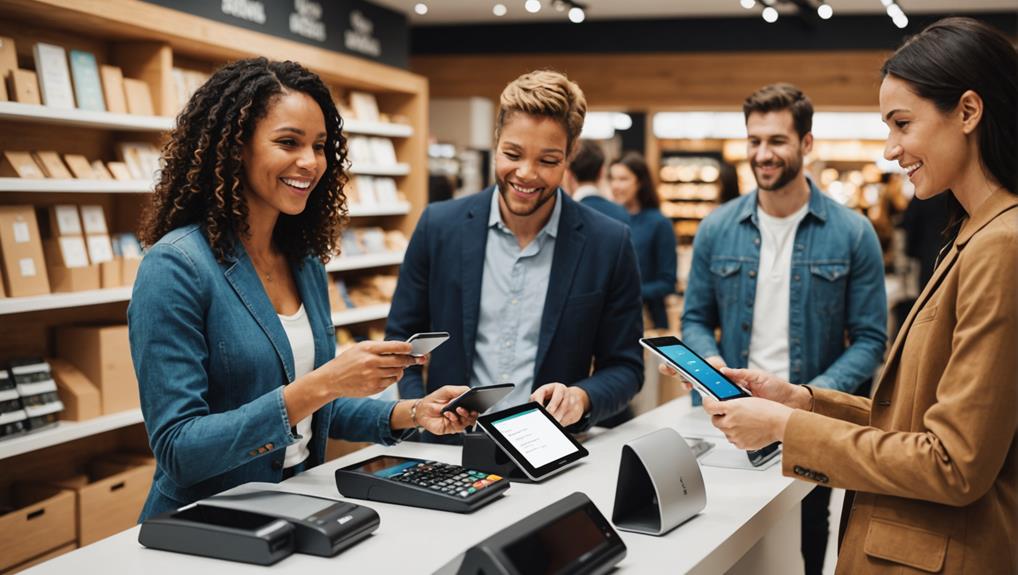
Top NFC Payment Systems for Small Business Success

As a small business owner, you'll find Square, PayPal Here, Shopify Payments, Clover, SumUp, and QuickBooks GoPayment among the top NFC payment systems to enhance your operational efficiency and customer satisfaction. Each system offers unique features tailored for specific business needs, from seamless integration and real-time accounting synchronization to budget-friendly options and e-commerce focused solutions. While Square excels in device compatibility and sales analytics, PayPal Here and Shopify provide flexible payment acceptance and direct integration, respectively. Clover and SumUp cater to comprehensive POS needs and cost efficiency. Learning more about each can help you choose the best fit for your business's growth.

Overview of NFC Technology

near field communication overview

NFC, or Near Field Communication, allows devices to exchange information over short distances, typically within a few centimeters. You'll find it embedded in many of today's smartphones and payment devices, making it an integral part of modern transactions. When you tap your phone at a checkout terminal, it's likely NFC technology at work.

This tech isn't just about tapping though; it's a versatile tool that streamlines data communication. NFC operates at 13.56 MHz and can transfer data at up to 424 Kbits/second, ensuring your transactions aren't just smooth but also swift.

Unlike Bluetooth, NFC doesn't require manual pairing or device discovery, making it more straightforward for you to use. You simply bring two NFC-enabled devices close to each other, and they automatically communicate.

Moreover, NFC's utility extends beyond payment systems. It's widely used for electronic ticketing in public transport and for sharing contacts, photos, and videos between devices. Imagine exchanging digital business cards just by tapping phones; NFC makes this possible with minimal hassle.

As a small business owner, embracing NFC technology could streamline your operations and enhance customer interactions, keeping you ahead in the fast-paced digital economy.
Square: Seamless Integration

As you explore the benefits of NFC technology for your small business, consider the impact of adopting a streamlined payment system like Square. This platform not only supports NFC transactions but also integrates smoothly with your existing setups, making it an ideal choice for businesses aiming for efficiency without the hassle.

Square's NFC capabilities allow customers to pay with a simple tap, using their smartphones or NFC-enabled cards. This feature speeds up the checkout process, reducing the time your staff spends on each transaction. It's all about quick payments that keep the line moving and customers happy.

You'll find that it's compatible with a wide range of devices, which means you won't need to invest in new hardware.

Moreover, Square offers comprehensive sales tracking and analytics tools. You can monitor sales trends, track inventory, and understand customer behaviors, all within the same system that handles your transactions.

This integration ensures that you have all the necessary data to make informed business decisions without switching between apps or systems.

PayPal Here: Versatile Solutions

flexible payment processing options

PayPal Here offers your small business a flexible approach to accepting payments, accommodating not only NFC but also chip and swipe transactions. With this system, you can turn your smartphone or tablet into a comprehensive mobile payment solution. It's especially handy if you're operating on the go, at pop-up shops, or outdoor markets.

The setup process is straightforward. You'll download the PayPal Here app, connect it to your PayPal account, and pair it with a PayPal card reader. This setup allows you to accept a variety of payment methods including major credit cards and PayPal payments.

The fees are competitive, with a clear pricing structure that doesn't surprise you with hidden charges.

You'll also benefit from the immediate access to funds. Unlike some systems that hold your money for days, PayPal transfers your earnings directly into your PayPal account, which you can then transfer to a bank account or spend directly from using your PayPal balance. This can be crucial for managing cash flow effectively.

Moreover, PayPal Here integrates with other business tools, offering features like inventory tracking and sales reports, helping you make informed decisions about your business on the fly. This integration streamlines your operations, saving you time and effort.

Shopify Payments: E-commerce Focused

Shopify Payments streamlines your online sales by integrating directly with your Shopify store, eliminating the need for external payment gateways. This built-in solution simplifies the setup process, allowing you to manage everything from a single platform.

You'll avoid the hassle of juggling multiple accounts and systems, which can save you a significant amount of time and effort.

When you use Shopify Payments, you're also benefiting from lower transaction fees compared to many third-party providers. The rates are straightforward and competitive, helping you to keep more of your hard-earned money.

Moreover, Shopify Payments supports a variety of payment methods including credit cards, Google Pay, and Apple Pay, expanding your reach to customers who prefer these modern payment options.

Security is a top priority with Shopify Payments. It complies with the highest level of PCI standards to ensure that your transactions, and your customers' data, are protected.

Additionally, the system includes fraud analysis features that help to shield you from potential security threats.

Clover: Full-Service POS

clover point of sale

Integrating seamlessly with your business operations, Clover offers a comprehensive POS system that caters to the diverse needs of small businesses. You'll find its adaptability key, as it supports both physical and digital store fronts.

Whether you're running a bustling café or a thriving boutique, Clover's hardware and software solutions are designed to scale and flex with your demands. You can choose from a range of devices, from portable card readers to full-scale stations complete with cash drawers and receipt printers.

Clover's user interface is remarkably intuitive, making it easy for you and your staff to pick up quickly without extensive training.

Beyond processing payments, Clover enriches your business management capabilities. It includes features such as inventory tracking, employee management, and customer data insights, all accessible via its dashboard. You'll appreciate how these tools help streamline daily operations and enhance decision-making based on real-time data.

Moreover, Clover's integration with numerous third-party apps ensures that you can tailor the system to fit your specific requirements. From accounting software to email marketing tools, you're equipped to expand its functionality as your business grows, ensuring that Clover isn't just a POS system but a comprehensive business solution.

SumUp: Budget-Friendly Choice

For small businesses looking to streamline their payment processes without breaking the bank, SumUp offers an affordable and efficient solution. With its low-cost hardware and no monthly fees, you're set up for success without hefty investments.

SumUp's pay-as-you-go system means you only pay a flat rate per transaction, keeping your costs predictable and manageable.

You'll find that setting up SumUp is a breeze. The device connects seamlessly with your smartphone or tablet via Bluetooth, turning your mobile device into a powerful point of sale. This simplicity extends to the user interface, which is intuitive, ensuring that you and your staff can start processing payments with minimal training.

Moreover, SumUp supports a variety of payment methods including NFC contactless payments, making it versatile enough to meet customer preferences. Whether it's Apple Pay, Google Pay, or credit and debit cards, you're equipped to handle it all.

QuickBooks GoPayment: Accounting Sync

accounting integration with gopayment

QuickBooks GoPayment seamlessly syncs with your accounting software, instantly updating your books each time you process a sale. This means you don't have to worry about manual entries or discrepancies.

As a small business owner, you'll appreciate how this integration reduces your workload and minimizes errors, allowing you more time to focus on growing your business.

The beauty of GoPayment is its deep integration with QuickBooks. When you make a sale, the details are automatically recorded in your accounting ledger. This includes the date, transaction amount, and item description, all sorted without extra input from you.

It's not just about convenience; it's about accuracy. By automating the data entry process, QuickBooks GoPayment reduces the chances of human error, ensuring that your financial records are precise and up-to-date.

Moreover, this synchronization supports real-time financial reporting. You can instantly access updated financial statements, such as profit and loss accounts and balance sheets.

This real-time insight is invaluable for making informed business decisions quickly.

Frequently Asked Questions

How Secure Are NFC Payments Compared to Traditional Credit Card Transactions?

NFC payments are generally more secure than traditional credit card transactions. They use encryption and tokenization, reducing the risk of fraud. You'll find these transactions quicker and safer, enhancing your overall payment experience.

Can NFC Systems Process Payments During Internet Outages?

You'll find that most NFC systems require internet to process payments. However, some can handle transactions offline and sync once connectivity is restored, ensuring you don't lose sales during internet outages.

Are There International Transaction Fees for NFC Payments?

Yes, you'll often face international transaction fees for NFC payments, as these depend on your bank and the payment system's policies. Always check the terms to avoid surprise charges when traveling or doing business globally.

How Do Customers Perceive the Safety of NFC Payments?

You might find that customers generally perceive NFC payments as safe due to the encryption technology used. However, some are still wary about security breaches and prefer traditional payment methods for their perceived reliability.

What Are the Environmental Impacts of Implementing NFC Technology?

Implementing NFC technology typically reduces paper waste by decreasing the need for printed receipts and physical tickets. You'll also find that it conserves resources, as digital transactions often require less energy than traditional methods.

Conclusion

You've got a variety of top-notch NFC payment systems to choose from, each tailored to fit your small business needs. Whether you're looking for seamless integration with Square, versatile solutions from PayPal Here, a focus on e-commerce with Shopify Payments, a full-service POS via Clover, a budget-friendly option like SumUp, or accounting synchronization with QuickBooks GoPayment, there's a solution out there that's right for you. Streamline your transactions and boost your business success effortlessly.

Top 5 NFC Payment Systems for Small Businesses

For your small business, you'll want to consider the top NFC payment systems for streamlined, secure transactions. Square offers fast, contactless payments integrating easily with Apple Pay and Google Pay. PayPal Here provides a versatile, globally recognized solution with transparent fees. Shopify Payments enriches online transactions with real-time analytics, while Clover Mini's compact design fits any space and still manages all-in-one payment processes. QuickBooks GoPayment syncs effortlessly with financial data, providing insights into sales trends. Exploring these options can significantly enhance your customer's checkout experience and offer deeper insights into operational efficiencies.

Exploring Square's NFC Capabilities

square s nfc technology exploration

Leveraging near-field communication (NFC) technology, Square offers a streamlined payment solution for small businesses. You can tap into a world where transactions are faster and more secure, simply by adopting this compact yet powerful tool.

As a small business owner, you're always looking for ways to optimize operations and enhance customer experiences. Square's NFC capabilities allow you to do just that.

When you set up Square's NFC payment system, you're not just upgrading your technology; you're revamping how your customers interact with your business. The process is seamless: customers simply hold their NFC-enabled devices or cards near your Square reader to complete a transaction.

There's no need for physical contact, which not only speeds up the process but also adds a layer of hygiene—an essential consideration in today's world.

Moreover, this technology supports a variety of payment methods including Apple Pay, Google Pay, and other NFC-enabled cards, ensuring you don't miss out on any customer due to payment constraints.

Benefits of PayPal Here for NFC

Switching your focus to PayPal Here, you'll find that it offers competitive advantages for NFC transactions. As a small business owner, embracing PayPal Here means you're opting for a versatile and globally recognized payment solution.

You'll appreciate how seamlessly it integrates with your existing operations, enabling you to accept a variety of payment types, including NFC-based methods like Apple Pay and Google Wallet.

One of the standout benefits is its straightforward fee structure. You're not bogged down by hidden charges; instead, you get a clear, predictable cost per transaction. This transparency helps you manage your finances better without any surprises.

Moreover, PayPal Here is renowned for its robust security measures. Each transaction is encrypted, significantly reducing the risk of fraud. This peace of mind is invaluable, as it allows you to focus more on growing your business rather than worrying about payment security.

The system is also incredibly user-friendly. Setting it up takes mere minutes, and its intuitive design ensures that both you and your customers enjoy a smooth transaction experience.

This ease of use extends to its mobile app, which is designed to help you track sales and inventory on the go, keeping you well-informed and ready to make data-driven decisions.

Shopify Payments NFC Features

shopify payments nfc functionality

As a small business owner, you'll find that Shopify Payments enhances your NFC payment capabilities significantly. By integrating directly with your online store, it offers a seamless transaction experience both online and in-person. You won't need separate systems for your sales channels, which simplifies management and reduces errors.

Shopify Payments supports a variety of card readers that are equipped with NFC technology, enabling contactless payments. This means you can offer a faster, more secure checkout experience, which customers love. Additionally, the system accepts Apple Pay and Google Pay, making it even more versatile for shoppers who prefer these methods.

With Shopify Payments, you're also equipped to handle the back-end seamlessly. The dashboard provides real-time reporting on sales and payments. This integration ensures you're always aware of your business's financial health and can make informed decisions quickly.

Furthermore, Shopify's security measures are top-notch. They manage all PCI compliance requirements, reducing your workload and keeping customer data safe. This peace of mind is crucial when dealing with sensitive payment information.

In short, Shopify Payments not only simplifies your payment process but also enhances it, giving you and your customers a better overall experience.

Clover Mini: Compact NFC Solution

While Shopify Payments offers a comprehensive NFC solution integrated with your online store, you might be looking for a more hardware-focused option. Enter the Clover Mini, a sleek and compact device that could be just what you need.

It's not just small; it's powerful, making it perfect for tight countertops but robust enough to handle your transaction needs.

You'll find that the Clover Mini supports various payment options, including NFC for contactless payments, which are becoming the norm amid health and safety considerations.

It's an all-in-one system that manages your payments, prints receipts, and even supports barcode scanning. The touchscreen interface is intuitive, making it easy for you and your staff to use right out of the box.

Integration with other business tools? You bet. Clover Mini connects seamlessly with a variety of POS systems, and because it runs on its own software platform, you're getting continuous updates that keep your tech on the cutting edge.

This device isn't just about accepting payments; it's about enhancing your entire sales process.

QuickBooks GoPayment NFC Review

quickbooks gopayment nfc evaluation

If you're seeking a mobile NFC payment solution that integrates effortlessly with your accounting software, QuickBooks GoPayment might be the answer. This system allows you to accept NFC payments directly from customers' smartphones or credit cards, making transactions smooth and speedy.

It's particularly useful if you're already using QuickBooks for your business finances; the synchronization with your accounts is seamless, ensuring that your financial data is always up-to-date without extra effort from you.

QuickBooks GoPayment offers a portable card reader that connects with your smartphone or tablet via Bluetooth. The setup is straightforward, and you'll find it's incredibly user-friendly, even if you're not particularly tech-savvy.

Transaction fees are competitive, offering you a cost-effective option without compromising on service quality.

Moreover, the security features are robust, providing you with peace of mind knowing your customer data is well-protected.

Real-time analytics are another perk, giving you insights into sales trends and customer behavior, which can help in tailoring your marketing strategies and inventory management.

Frequently Asked Questions

Can NFC Payments Be Accepted Without an Internet Connection?

No, you can't accept NFC payments without an internet connection. The payment system needs to connect online to verify transactions securely. You'll need a stable internet connection for smooth, secure payment processing.

Are There Monthly Fees Associated With NFC Payment Systems?

Yes, some NFC payment systems do charge monthly fees. You'll need to check each provider's pricing model to see what fits your budget, as these fees can vary widely depending on the service.

How Secure Are NFC Transactions Compared to Traditional Card Swipes?

NFC transactions are generally more secure than traditional card swipes because they use encryption and tokenization. You'll find that your data's better protected during each transaction, reducing the risk of fraud.

Do NFC Payment Systems Require Special Training to Operate?

You don't need special training to operate NFC payment systems; they're designed to be user-friendly. A quick setup guide is usually enough to get you started with basic transactions.

What Are the Refund Policies for NFC Transactions?

Refund policies for NFC transactions vary. You'll need to check with the specific payment system provider to understand their guidelines. Typically, they align with standard e-commerce refund practices for consumer protection.

Conclusion

You've explored the top NFC payment systems, each offering unique benefits for your small business. Whether it's Square's versatility, PayPal Here's ease, Shopify's integration, Clover Mini's compact design, or QuickBooks GoPayment's efficiency, you're now equipped to choose the best fit. Remember, the right NFC system not only streamlines transactions but also enhances customer experience. So, take your pick and boost your business's efficiency and appeal with the perfect NFC payment solution.