
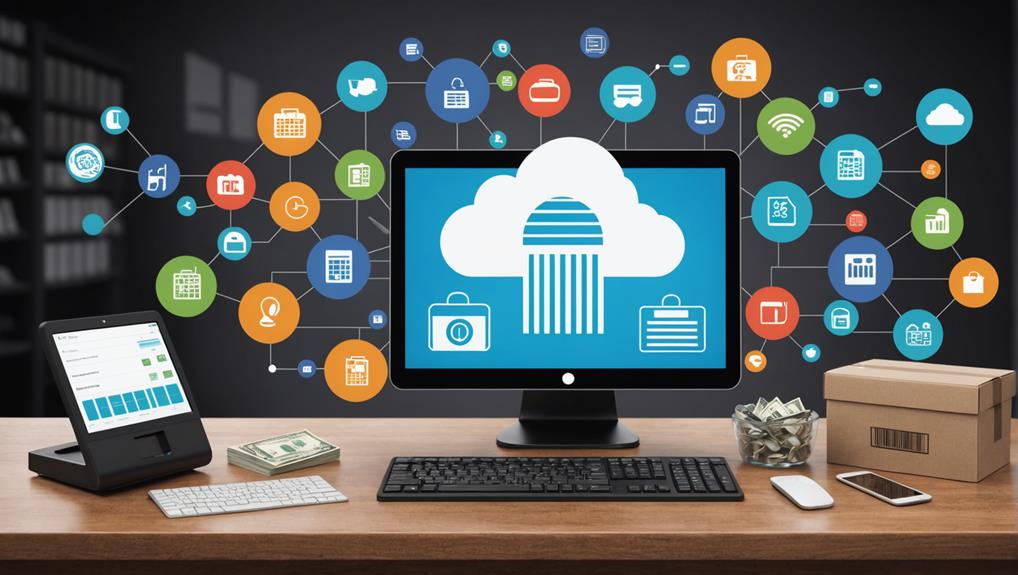
To effectively manage your cloud-based POS inventory, you'll need to adopt real-time data synchronization to avoid overselling and ensure product availability. Optimize your inventory by setting automated reorder thresholds and employing real-time tracking to immediately adjust stock levels based on sales analytics. Don't overlook the importance of securing sensitive information with robust encryption and multi-factor authentication. Additionally, integrating multi-channel sales will help maintain consistent customer experiences across all platforms. By analyzing sales and inventory data, you can adjust inventory proactively to meet anticipated demands. Mastering these strategies sets a strong foundation for further exploring the advantages of cloud-based POS systems.
Understanding Real-Time Data Sync

Real-time data synchronization is crucial when managing your inventory through a cloud-based POS system. It ensures that the information you're seeing is always current, preventing the common pitfalls of overselling or understocking. Imagine you're running a promotion on a popular item. Without real-time sync, you mightn't see the inventory levels adjusting as sales occur, leading to potential customer dissatisfaction if products run out unexpectedly.
This synchronization isn't just about avoiding mishaps; it's also about enhancing efficiency. You're able to make quicker decisions based on the most accurate and up-to-date information. For instance, if you notice a sudden spike in the demand for a product, you can immediately adjust your orders or promotions accordingly.
Furthermore, this immediate data reflection helps in forecasting trends more accurately, aiding in long-term strategic planning.
Moreover, real-time data helps in maintaining a seamless experience across various sales channels. Whether a customer shops online or in-store, they get a consistent view of product availability. This integration across channels not only improves customer satisfaction but also boosts your reputation as a reliable retailer.
In essence, real-time sync empowers you to manage your inventory more effectively, adapting swiftly to both market and consumer demands.
Enhancing Security Protocols
While real-time synchronization boosts operational efficiency, it also intensifies the need to secure sensitive data within your cloud-based POS system. As a business owner, you've got to prioritize robust encryption methods.
Utilizing strong, end-to-end encryption ensures that your data—whether it's credit card information or customer profiles—remains protected from unauthorized access as it travels across networks.
You should also consider implementing multi-factor authentication (MFA) for accessing the POS system. This adds an additional layer of security, making it tougher for intruders to breach your system simply by stealing a password.
MFA requires users to verify their identity using something they know (like a password), something they've (like a smartphone app), or something they're (like a fingerprint).
Regularly updating your software is crucial. Cyber threats evolve rapidly, and staying on top of updates helps patch vulnerabilities that could be exploited by hackers.
Don't ignore those update notifications—they're your first line of defense against potential security breaches.
Streamlining User Access Control

Managing user access effectively can significantly streamline your cloud-based POS system operations. It's all about who's access to what. By setting clear, role-based access controls, you're not just boosting security but also making sure that each part of your system is as efficient as possible.
First, determine the different roles required within your system. You might've managers, sales staff, inventory specialists, and others. Each role should have access only to the features necessary to perform their jobs. This minimizes risks and focuses staff on their responsibilities.
Implementing a tiered access structure is crucial. For example, while managers might need to view sales data, edit inventory, and process returns, sales staff should be limited primarily to sales transactions and basic customer service functions. This separation ensures that sensitive areas of your system are shielded from unnecessary exposure.
You also need to regularly review and update access permissions. As roles change and new features are added to your POS system, adjust access controls to reflect these changes.
Make it a routine part of your operational reviews. By keeping user access tight and roles well-defined, you'll maintain a smoother, more secure system.
Optimizing Inventory Tracking
How effectively do you track your inventory? In today's fast-paced market, having a cloud-based POS system that keeps your inventory management sharp is crucial. You'll want to leverage real-time tracking features, which allow you to see stock levels instantly and accurately. This approach minimizes the risks of overstocking or understocking, ensuring you're not caught off-guard.
First, set up automatic reordering thresholds. This means your system will alert you or even place orders automatically when stock levels fall below predetermined points. It's a lifesaver for keeping popular items in stock without manual checks.
Next, utilize detailed reporting tools provided by your POS system. These reports can analyze sales patterns and inventory turnover, which helps in forecasting future needs more accurately.
Integrating Multi-Channel Sales

Integrating multi-channel sales into your cloud-based POS system streamlines your operations, ensuring that inventory levels are synchronized across all platforms. This synchronization means you're always aware of what's available, what's running low, and what needs restocking, no matter where the sale occurs.
When you sell through multiple channels—online, in-store, or via mobile—you'll find that each channel attracts different customer segments. By integrating these channels into one system, you ensure a unified customer experience. Your clients won't face the disappointment of ordering an item that appears available online but is actually sold out in-store.
You also reduce the risk of overselling. With real-time updates, your POS system automatically adjusts inventory counts the moment a sale is made, no matter the channel. This seamless integration helps you manage promotions and discounts more effectively. You can launch a promotion that spans all channels and be confident that the inventory counts will keep up.
Lastly, this integration enables better staffing and resource allocation. If you notice that certain products are frequently sold on specific platforms, you can adjust staffing levels and marketing strategies accordingly, maximizing efficiency.
With a cloud-based POS system handling the multi-channel intricacies, you're set to focus more on growing your business.
Analyzing Sales and Inventory Data
With cloud-based POS systems, you gain powerful tools for analyzing sales and inventory data, which can dramatically enhance your decision-making process.
These systems allow you to track every transaction in real-time, offering insights that help you understand which products are performing well and which aren't. This visibility isn't just about knowing what's in stock; it's about understanding customer preferences and spotting trends as they emerge.
You can dive deep into the data. Look at the sales patterns over days, weeks, or even seasons. This analysis helps you identify not only your bestsellers but also the underperformers that may need a marketing boost or a strategic discount.
You'll see clear, actionable patterns that could guide your next big decision.
Moreover, cloud-based POS allows you to segment your sales data by demographics, time periods, and more. You can fine-tune your promotions and stock levels based on solid data about who buys what and when.
It's all about making informed choices that align with your business goals and customer needs, ensuring you're not just reacting to the market, but proactively managing your growth.
Leveraging Automated Reordering

Harnessing the power of automated reordering, you'll streamline your inventory management and reduce the risk of stockouts. This smart feature in cloud-based POS systems works by setting thresholds that, once reached, automatically trigger orders for your best-selling products. You don't need to manually check stock levels or place orders, which saves you a tremendous amount of time and minimizes human error.
Here's how you can make it work for you: first, analyze your sales data to set accurate reorder points. Consider factors like seasonal demand and supplier lead times. This ensures your automated system orders the right amount at the right time.
Next, integrate your POS with your suppliers' systems. This allows for real-time communication and faster replenishment, keeping your shelves stocked and your customers happy.
Frequently Asked Questions
How Does Weather Impact Cloud-Based POS System Performance?
Weather doesn't directly affect your cloud-based POS system as it's hosted on remote servers. However, severe conditions could disrupt your internet connection, impacting your access to the system and its real-time functionalities.
Can Cloud POS Systems Operate Offline?
Yes, you can operate cloud POS systems offline, but they'll store transactions temporarily. Once reconnected, they'll sync all data back to the cloud, ensuring your sales and inventory records are consistently updated.
What Are the Costs of Transitioning to a Cloud-Based Pos?
You'll face upfront costs, such as subscription fees and hardware purchases, when switching to a cloud-based POS. Ongoing expenses include service fees and potential training costs for your team.
How Does a Cloud-Based POS Handle Customer Returns?
Your cloud-based POS system tracks customer returns efficiently by updating inventory in real-time. It simplifies processing refunds or exchanges directly through the platform, ensuring accurate records and customer satisfaction.
What Training Is Required for Staff Using a New Cloud POS System?
You'll need training on system navigation, transaction processing, and troubleshooting. It's crucial to understand inventory management and customer interaction features. Regular updates and additional sessions might be required as the system evolves.
Conclusion
Wrapping up, you've got all the tools to revolutionize your inventory management with cloud-based POS solutions. Keep your data synced in real-time and beef up your security protocols to protect it. Streamline access, optimize how you track inventory, and integrate those multi-channel sales for smoother operations. Analyzing your data helps you spot trends and forecast needs, while automated reordering can save you time and stress. Embrace these strategies, and you'll see your business efficiency soar.
Related articles: 7 Tips to Sync POS With Inventory Management · 3 Best Ways to Sync POS With Inventory Management · 5 Key Steps to Sync POS With Inventory Management