

Switching to wireless printers in your POS setup can greatly enhance your operational efficiency and give you the flexibility to adapt to busy periods. You'll enjoy a clutter-free environment, reduce the risk of accidents, and have the ability to place printers strategically without worrying about cables. The installation is straightforward, requiring just a power source and Wi-Fi, which cuts down on IT support. Plus, wireless options easily integrate with modern POS systems, allowing for smooth updates and scalability. There's a lot on offer when upgrading your setup, which could transform how you manage transactions and interact with customers. Further details could reveal even more benefits for your specific business needs.
Benefits of Wireless Connectivity

Integrating wireless printers in your POS setup can significantly streamline your sales processes. When you're not tethered by cords, you gain the flexibility to design your sales floor or counter space without worrying about physical connections. This isn't just a minor convenience; it's a game-changer in bustling retail environments.
Imagine the ease of relocating a printer to wherever it's needed most during peak hours or for special events. You're not just stuck with a static setup. Instead, you can adapt dynamically, allowing for better customer service and fewer interruptions.
Wireless connectivity means you can place printers strategically across the store, reducing the time it takes for your staff to complete transactions. They won't need to weave through crowded spaces or wait for access to a centrally located printer.
Moreover, setting up your POS system becomes a breeze. You're not fumbling with complex wiring or the need for extensive IT support. It's a straightforward process that lets you focus more on sales and less on logistics.
This ease of setup also comes in handy if you decide to expand or modify your point of sale locations in the future. Wireless technology gives you the scalability to grow and adapt effortlessly.
Enhancing POS System Efficiency
Building on the flexibility that wireless printers bring to your POS setup, enhancing system efficiency becomes the next step in optimizing your retail operations. By cutting down the clutter of cables, you're not just cleaning up the counter space, but you're also reducing the risk of accidents and disconnections during peak hours.
This streamlined environment lets you and your staff move more freely, speeding up the transaction process significantly.
Moreover, wireless printers can be positioned strategically to serve multiple checkout points, eliminating the need for multiple devices. This setup not only saves space but also reduces energy consumption and maintenance costs.
You'll find that updating or integrating new devices becomes a breeze, as wireless systems allow for greater scalability without disruptive hardware changes.
You can also leverage the portability of wireless printers to set up impromptu checkout stations during high-traffic periods, like holiday sales. This flexibility improves customer experience by reducing wait times and preventing bottlenecks at the counter.
Cost Comparison: Wireless Vs. Wired

While wireless printers offer notable advantages in terms of flexibility and space management, it's crucial to examine their cost implications compared to traditional wired models. Initially, you might notice that wireless printers generally have a higher upfront price tag. This is partly because they incorporate more advanced technology to enable wireless connectivity. You're not just buying a printer; you're investing in the convenience of mobility and reduced clutter.
However, the price of the printer itself isn't the whole story. Consider the ongoing costs. Wireless printers often lead to lower installation costs since you won't need to run cables throughout your space or potentially hire a professional to manage a complex wired network. This factor alone can make a significant difference, especially in larger setups.
Also, think about maintenance. Wired networks might need more frequent checks and fixes due to physical damages like cable wear and tear. In contrast, wireless printers minimize such risks, potentially reducing maintenance expenses over time.
Ultimately, while the initial outlay for wireless models might be higher, the potential savings on installation and maintenance could make them a more cost-effective choice in the long run. You'll need to balance these factors based on your specific business needs and projected growth.
Setup and Integration Simplicity
Transitioning to a wireless printer setup simplifies both the initial installation and ongoing integration with your POS system. You're not bogged down by cumbersome wiring or complex hardware configurations. Instead, you can have your printer up and running in no time, as it primarily requires a power source and a Wi-Fi connection.
This ease of setup means you don't have to rely heavily on technical support or external consultants, reducing your setup costs and time significantly.
Moreover, integrating a wireless printer with your existing POS software is generally straightforward. Most modern POS systems are designed to seamlessly recognize and communicate with wireless devices. This means you can easily add or replace printers without disrupting your service.
Updates and troubleshooting can be managed remotely, ensuring that your system always runs smoothly with minimal downtime.
The flexibility of wireless printers also allows for easy scalability. As your business grows, you can effortlessly connect additional printers to your network without overhauling your existing setup.
This adaptability makes wireless printers an ideal choice for businesses looking to expand or update their POS systems without unnecessary hassle or expense.
Space Optimization in Retail Settings
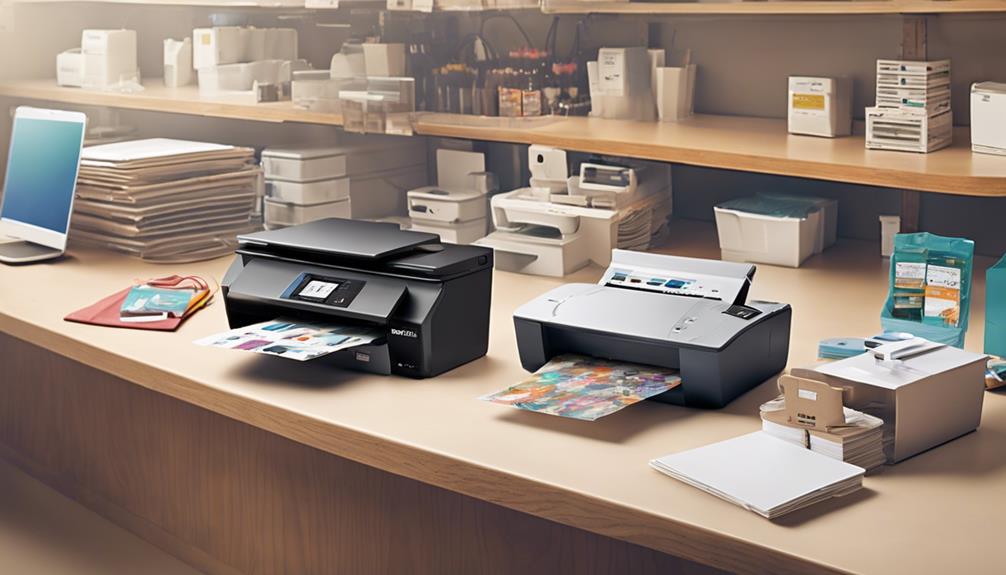
In retail environments, space is often at a premium, making the compact size of wireless printers a significant advantage.
You'll find that eliminating the clutter of cables not only streamlines the appearance of your sales counter but also frees up essential space for other critical tools and products. This optimization is vital in creating a more functional and customer-friendly shopping experience.
When you switch to wireless printers, you're not just tidying up; you're also gaining flexibility in your store layout.
You can place your printer wherever you need it most, without worrying about proximity to data ports. This flexibility allows for better use of your retail space, enabling you to adapt quickly to changes in business volume or store layout without additional costs.
Moreover, the sleek design of modern wireless printers can complement your store's aesthetic, enhancing the overall shopping environment.
You'll appreciate how a well-organized space can lead to more efficient operations and potentially higher sales.
It's about maximizing every square foot of your floor plan to improve workflow and customer interaction.
Reliability and Performance Metrics
Beyond aesthetics and space-saving benefits, the reliability and performance of wireless printers are crucial for your POS setup. You need a system that not only looks good but performs under pressure.
Wireless printers have made significant strides in reliability, offering robust connectivity options such as Wi-Fi and Bluetooth, which reduce the chances of disconnections during crucial sales transactions.
When evaluating performance metrics, consider the print speed, which is measured in pages per minute (PPM). A higher PPM can handle your high-volume periods more efficiently, ensuring that customer wait times are minimized.
Also, look at the resolution, typically expressed in dots per inch (DPI). Higher DPI ensures sharper, clearer prints, which is vital for receipts that require precise barcode scanning.
Battery life is another critical factor, especially in mobile POS setups. You don't want your printer dying in the middle of a rush hour. Most modern wireless printers come with long-lasting batteries, but it's worth checking the specs to make sure they meet your business's daily operational needs.
Lastly, consider the printer's durability and warranty. A good wireless printer should withstand the rigors of a busy retail environment and come with a solid warranty that protects your investment.
Future-Proofing Your POS System

As you assess the reliability and performance of wireless printers for your POS system, it's also vital to consider how these technologies will evolve. Future-proofing your system isn't just a precaution; it's a strategy to ensure your business stays ahead, adaptable to new trends and customer demands.
Wireless technology, including printers, is rapidly advancing. By choosing devices that are compatible with multiple operating systems and can update firmware via the cloud, you'll avoid obsolescence. Look for printers that support evolving security protocols to protect your data as cyber threats grow more sophisticated.
Additionally, consider the scalability of the wireless printers. Can they handle increased transaction volumes during peak times? Are they capable of integrating with other digital tools and systems you might adopt in the future? Opt for printers that offer modular capabilities, allowing you to add functionalities without replacing the entire system.
Lastly, stay informed about tech innovations. Regularly attending webinars, following industry news, and engaging with other business owners can provide insights into how POS technologies, including wireless printers, are changing. This knowledge will guide your purchasing decisions, ensuring your POS system not only meets current needs but also embraces future opportunities.
Frequently Asked Questions
How Do Wireless Printers Impact Employee Training?
Wireless printers simplify your training process. You'll spend less time on technical setup and more on customer service skills. They're user-friendly, reduce cable clutter, and allow flexibility in arranging your workspace.
Can Wireless Printers Handle High-Volume Printing During Peak Hours?
Yes, you'll find that wireless printers can handle high-volume printing during peak hours efficiently. They're designed to manage large print jobs quickly, ensuring you won't face delays in your busiest periods.
What Are the Environmental Impacts of Wireless Versus Wired Printers?
You'll find wireless printers generally consume less energy than wired ones, reducing your carbon footprint. Plus, they minimize cable use, cutting back on electronic waste and promoting a cleaner, greener workspace.
Are There Specific Wireless Printer Models Recommended for Food Service Industries?
You should consider models like the Epson TM-m30 and Star Micronics TSP143IIIW, known for their reliability and fast printing in busy food service environments. They'll streamline your operations and reduce counter clutter.
How Do Wireless Printers Affect Customer Privacy and Data Security?
Wireless printers can pose risks to your customer's privacy and data security if not properly secured. They transmit data over Wi-Fi, making encryption and secure network practices crucial to prevent unauthorized access.
Conclusion
As you've seen, switching to wireless printers for your POS setup can streamline your operations, save space, and cut costs. The simplicity of setup and integration alone makes them an attractive choice. Plus, with their reliable performance and ability to keep up with future tech advancements, you're setting yourself up for success. Don't let tangled wires hold you back. Optimize your retail space and embrace the efficiency of wireless connectivity to keep your business moving smoothly.
Related articles: Setting up Your POS Terminal With Wireless Printers · 5 Tips for Integrating Wireless Printers With POS Terminals · 7 Tips for Choosing Cafe Touch Screen Terminals