
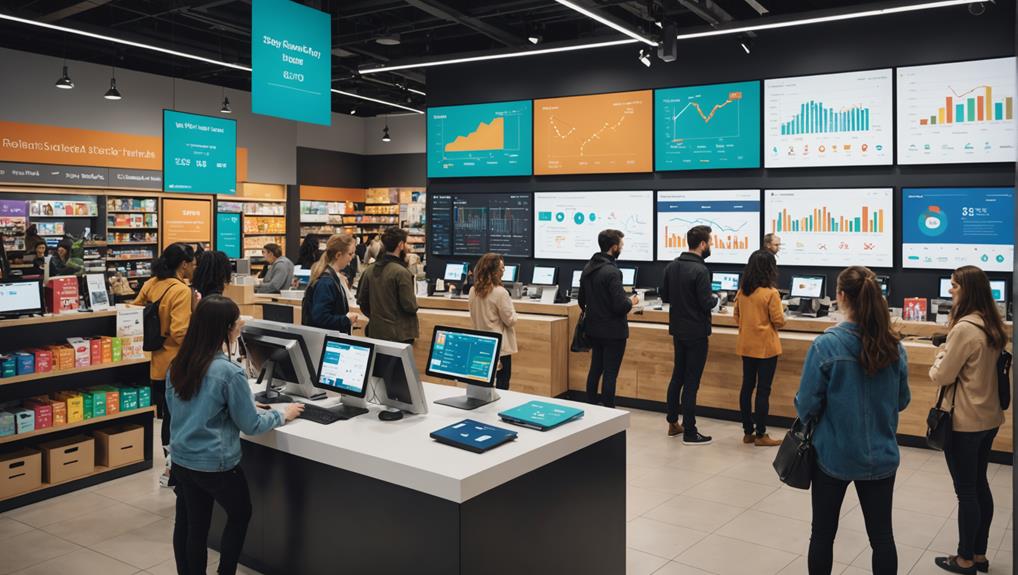
POS analytics play a crucial role in your retail success by providing invaluable insights into customer purchase patterns, inventory management, and employee performance. By analyzing data from every transaction, you're able to identify best-selling products, optimize stock levels, and enhance pricing strategies. This real-time information helps you make informed decisions, reducing understocking or overstocking risks and adjusting product offerings to meet market demand. Moreover, understanding sales trends enables you to tailor marketing and promotional efforts effectively. As you explore deeper, you'll discover even more ways POS analytics can tailor your strategy to meet consumer needs and boost your business outcomes.
Understanding POS Data Collection

To effectively leverage POS analytics, you first need to grasp how POS data is collected. Every time you make a purchase, the Point of Sale (POS) system records various data points: the items you've bought, the time and date of purchase, payment methods, and even your customer details if you're part of a loyalty program. This information is crucial for retailers to understand what's happening at the checkout counters.
Each POS terminal acts like a data goldmine. When you swipe your card or scan a product, the system captures and stores that action. This isn't just about what's been sold, but also how it was sold. Was it on sale? Paid with credit or cash? These details are automatically fed into a centralized database where they're processed and analyzed.
You're not just handing over money; you're providing valuable business insights. Retailers use this data to streamline operations and enhance customer service. They can track inventory in real-time, manage employee performance, and ensure pricing accuracy—all of which improves your shopping experience.
Analyzing Customer Purchase Patterns
Delving into customer purchase patterns offers invaluable insights that can dramatically shape retail strategies. By examining what, when, and how often your customers buy, you're not just observing transactions; you're peering into their preferences and behaviors. This understanding allows you to tailor your marketing and sales approaches directly to meet their needs.
You'll see which products are your bestsellers and which ones don't resonate as well with your audience. This isn't just about stocking the right items—it's about understanding why certain products outperform others. Is it the price point, the product placement, or perhaps the promotions you run? POS analytics give you these answers.
Moreover, tracking purchase frequencies and patterns over time can reveal trends and seasonality. You'll know when to ramp up marketing efforts or introduce new products.
It also helps in crafting personalized experiences. If you know a customer buys coffee every morning, why not send them a coupon for their favorite blend?
Optimizing Inventory Through Analytics
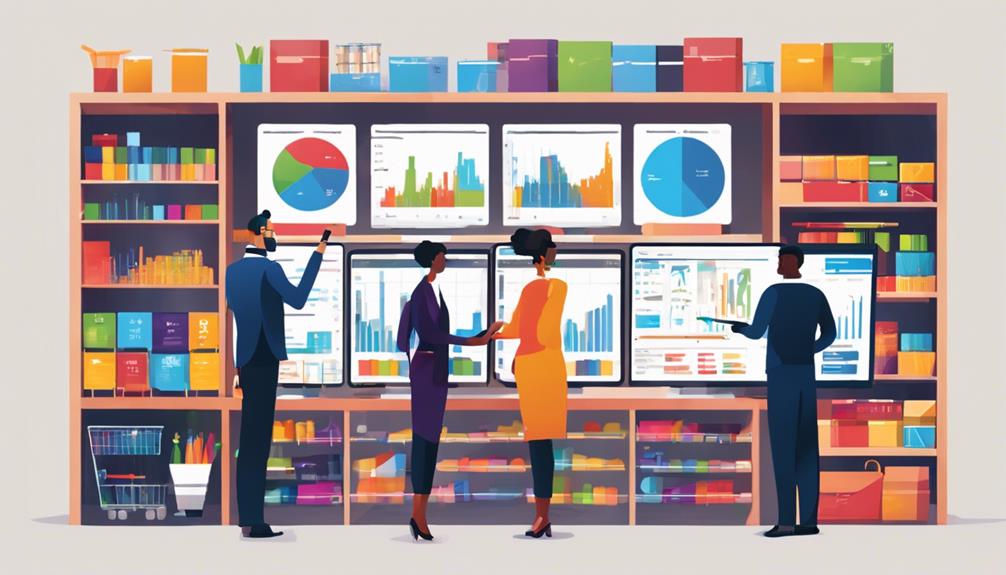
Harnessing the power of POS analytics significantly streamlines your inventory management. By analyzing real-time sales data, you can precisely predict how much stock you'll need and when. This proactive approach minimizes the risk of understocking or overstocking, which can lead to lost sales or excessive markdowns, respectively.
With POS analytics, you're not just guessing what trends will hit next season; you're basing your decisions on hard data. For instance, if a particular item sells faster than anticipated, you can reorder before you run out, ensuring you always meet customer demand.
Conversely, if another item lingers on shelves, analytics can prompt you to adjust pricing or marketing strategies to move that stock.
Moreover, POS analytics helps you understand your best-selling products and the times they sell most, enabling you to optimize both ordering schedules and marketing campaigns. This targeted approach not only boosts your sales but also enhances customer satisfaction, as shoppers find what they want when they want it.
Enhancing Employee Performance
How can POS analytics elevate your team's performance? By harnessing detailed sales data, you can pinpoint exactly which employees excel in sales and who might need further training. This isn't just about tracking numbers; it's about understanding the why behind them.
For instance, POS systems can show you peak sales times and associate them with staff working those hours. You'll see who thrives under pressure and who struggles, providing clear indicators for targeted coaching.
It's also about motivation. When employees see tangible evidence of their direct impact on sales, it boosts morale and drives them to improve.
Moreover, POS analytics allow you to implement incentive programs based on real performance metrics. Instead of a one-size-fits-all approach, you can customize rewards that resonate with your team's diverse motivations and talents.
This personalization shows you're paying attention, which in itself can increase employee loyalty and effort.
Strategic Pricing Decisions
Nearly every retailer faces the challenge of setting the right prices for their products. You're constantly balancing customer demand, market competition, and your cost structures. With POS analytics, you've got a powerful tool at your fingertips to make strategic pricing decisions that can drive your sales and enhance customer satisfaction.
Here's how it works: POS systems collect real-time data on which products are flying off the shelves and which aren't. This insight allows you to identify the price points that are attracting customers or, conversely, deterring them. You can spot patterns and adjust prices dynamically, responding to market conditions much faster than ever before.
Imagine you notice a sudden spike in demand for a particular item. Instead of a blanket price increase, use POS data to analyze the demographics buying the product. Are they price-sensitive? If not, a slight increase might be feasible without affecting sales volumes.
Alternatively, if a product isn't performing well, consider tactical discounts to clear stock without undercutting your brand value.
In essence, POS analytics don't just help you set prices; they empower you to adapt them cleverly and continuously. It's all about staying competitive while maintaining profitability.
Forecasting Future Sales Trends
Beyond setting strategic prices, POS analytics also enable you to forecast future sales trends effectively. By analyzing past sales data, you're not just looking at numbers; you're uncovering patterns that predict what might happen next in your business. This isn't about guessing; it's about making informed predictions that can drastically alter how you manage inventory and promotions.
For example, if you notice that sales of a particular product spike every third month, you can plan to increase your stock before these peaks to avoid sell-outs. Similarly, understanding downtrends allows you to adjust orders to reduce excess inventory. It's all about staying one step ahead, ensuring you're never caught off guard.
Moreover, POS analytics can highlight emerging trends in customer preferences. Maybe you've noticed more people buying eco-friendly products in recent months. With this insight, you could consider expanding your range in this category to capture more sales.
It's essential to keep your finger on the pulse of shifting consumer behaviors; POS analytics offer you this capability. Incorporating these forecasts into your business strategy isn't just smart; it's necessary for staying competitive in a rapidly changing retail landscape.
Be proactive rather than reactive, and watch how your foresight leads to increased success.
Frequently Asked Questions
How Does POS Analytics Influence Customer Loyalty Programs?
POS analytics help you tailor customer loyalty programs by tracking purchasing behaviors and preferences. You'll identify what incentives work best and can personalize offers, boosting customer satisfaction and retention.
What Are Common Security Concerns With POS Data?
You'll find common security concerns with POS data include unauthorized access, data breaches, and fraudulent transactions. Protecting this data is crucial to prevent financial losses and safeguard customer information.
Can POS Analytics Integrate With Other Business Management Tools?
Yes, POS analytics can integrate with other business management tools, enhancing your ability to track inventory, manage employees, and understand customer behavior, enabling more informed decisions and streamlined operations across your business.
How Do Seasonal Trends Affect POS Analytics?
Seasonal trends significantly impact your POS analytics by highlighting shifts in consumer buying patterns. You'll notice sales spikes during holidays and seasonal changes, aiding in inventory management and marketing strategy adjustments.
What Initial Costs Are Involved in Setting up POS Analytics?
You'll face initial costs like software licensing, hardware purchases, and installation fees when setting up POS analytics. Training and potential integration with existing systems can also add to your upfront expenses.
Conclusion
You've got the tools to transform your retail strategy using POS analytics. By understanding how to collect and analyze POS data, you can decipher customer purchase patterns, optimize your inventory, and enhance employee performance. Making strategic pricing decisions becomes simpler, and forecasting future trends turns into an informed, data-driven process. Embrace these insights to not just meet, but exceed your sales goals and keep your business thriving in a competitive market. Dive into the data—it's your roadmap to success.
Related articles: Elevate Retail Sales With 2024 POS Analytics Trends · What Are the Latest Trends in POS Sales Reporting? · Top 3 Trends in POS Sales Reporting Analysis