

To elevate your retail sales in 2024, you'll want to leverage the latest POS analytics trends. By harnessing real-time data, you can optimize inventory, tailor customer interactions, and adjust your marketing strategies on the fly. Utilize AI and predictive analytics to anticipate market trends and customer preferences, ensuring you're always one step ahead. Cross-channel insights will help you understand customer behaviors across various platforms, enhancing both inventory decisions and promotional strategies. With enhanced POS analytics, your ability to respond quickly and effectively to consumer demand will set you apart. Curious about how these insights can further transform your business? You'll find exploring more can significantly boost your operational success.
Harnessing Real-Time Sales Data
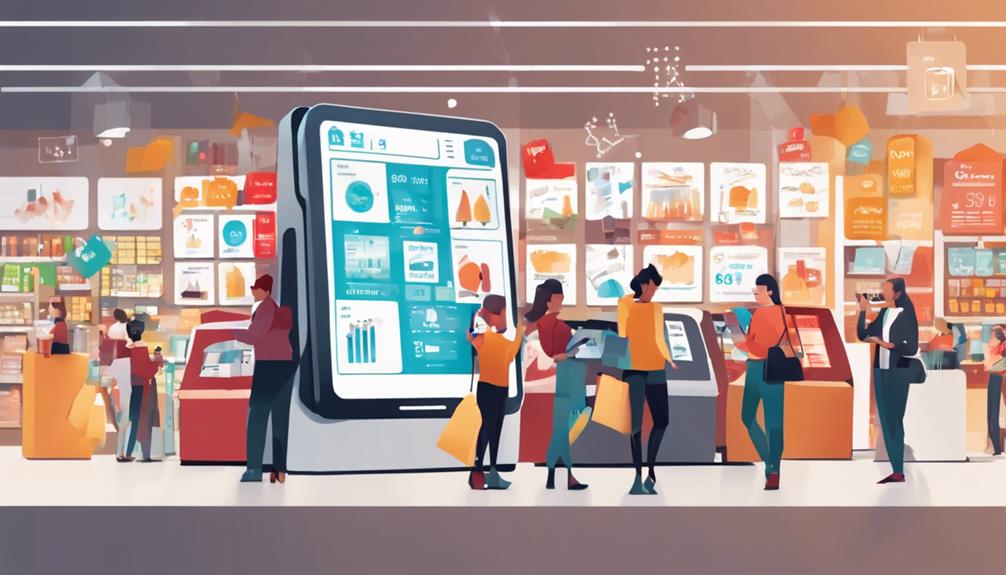
While you manage your retail operations, harnessing real-time sales data can significantly enhance decision-making processes.
You'll find that this data not only offers insights into what's selling but also informs you about when and where these transactions occur. This allows you to adjust staffing, optimize inventory levels, and tweak marketing strategies effectively.
Imagine knowing which products spike in sales on certain days of the week or during specific hours. You can leverage this information to ensure that your shelves are never empty when demand peaks, and you're not overstaffed during slow periods.
Real-time data helps you identify patterns that mightn't be obvious otherwise, enabling more efficient resource management.
Moreover, this approach supports dynamic pricing strategies. If a particular item sells quickly, you might consider increasing its price slightly during high-demand periods to maximize revenue. Conversely, slowing sales can prompt timely promotions to boost turnover.
This isn't just about reacting faster—it's about being proactive. By analyzing the data as it comes in, you're always one step ahead, adapting to market conditions in real-time.
This agility can be the difference between outperforming competitors and playing catch-up. So, dive into your data, and let it guide your tactical decisions.
Enhancing Customer Experience Strategies
As you shift focus toward enhancing customer experience strategies, remember that every interaction a customer has with your brand shapes their perception and influences their loyalty.
It's crucial to analyze how your POS data reflects customer preferences and satisfaction levels. This data can tell you what's working and what isn't, allowing you to make targeted improvements that resonate with your customers.
You're sitting on a goldmine of insights. By digging into the specifics—like which products tend to co-sell or the times when customer traffic peaks—you can tailor your staff scheduling and inventory management to better meet demand.
It's all about personalizing the shopping experience. Can you imagine the boost in satisfaction when a customer finds their preferred products available and receives assistance without delay?
Moreover, consider the power of loyalty programs integrated with your POS system. These programs can track purchase history and customer behavior, enabling you to offer personalized discounts or rewards.
This not only enhances the customer experience but also encourages repeat business.
In essence, use your POS data to its fullest to refine your customer service approach. This will ensure that every shopper's encounter with your brand is positive, memorable, and above all, repeatable.
Integrating AI for Predictive Analytics

Nearly every modern retail strategy can benefit from integrating AI for predictive analytics. You're likely familiar with the basics of AI, but harnessing it for predictive analytics transforms how you approach sales trends, customer behaviors, and even market dynamics.
By feeding your POS system with AI-driven tools, you can anticipate what your customers might want tomorrow, next month, or even next season.
Imagine knowing which products will trend based on social media buzz and changes in consumer habits. AI sifts through vast amounts of data to identify patterns you can't see on your own. This isn't just about reacting to trends; it's about being steps ahead, crafting marketing campaigns that hit right when the trend peaks.
You'll also tailor your promotions more effectively. AI can predict the success of a discount or a special offer before you launch it, optimizing your marketing spend.
And it's not just guessing; it's about making data-driven decisions that increase your chances of success.
Optimizing Inventory Through Analytics
Building on the predictive prowess of AI, optimizing your inventory becomes a more streamlined and efficient process. By leveraging data analytics, you're able to predict customer demand with higher accuracy, ensuring you're not stuck with surplus stock or, conversely, missing sales opportunities due to stockouts. This isn't just about reacting to trends; it's about preempting them.
With advanced analytics, you can dive into the nuances of purchasing patterns, seasonal fluctuations, and even the impact of marketing campaigns on demand. This insight allows you to tailor your inventory orders, not just in quantity but in variety. You'll know exactly when to stock up on certain items and when to scale back, maximizing your storage space and reducing holding costs.
Moreover, analytics can highlight inefficiencies in your supply chain. Perhaps there's a recurring delay from a particular supplier, or maybe a specific product line consistently underperforms. Armed with this knowledge, you can make informed decisions, like sourcing from more reliable suppliers or discontinuing underperforming products.
Incorporating POS analytics transforms inventory management from a guessing game into a science. As you continue to refine your approach, you'll see not only cost savings but also improvements in customer satisfaction and retention.
Dive into these analytics; they're your roadmap to a leaner, more responsive inventory.
Personalizing Promotions Effectively

With the power of POS analytics, you can now craft promotions that resonate deeply with each customer. By analyzing purchasing behaviors, you're able to segment your audience into distinct groups with similar preferences and shopping patterns. This means you can tailor your offers to match exactly what they're most likely to buy, not just what you think they might like.
Imagine sending a coupon for their favorite coffee brand right when they're most likely to need a refill, or offering a discount on a complementary product right after they've purchased something that goes perfectly with it. These targeted promotions aren't just more effective; they also make your customers feel understood and valued, which boosts loyalty.
Moreover, the real-time capabilities of modern POS systems allow you to adjust promotions quickly based on immediate feedback and emerging trends. If you notice that a particular offer isn't performing as well as expected, you can tweak it on the fly, testing different incentives until you find the formula that works.
This agility ensures that your marketing efforts are always optimized for maximum engagement and profitability. Personalizing promotions isn't just a trend; it's a strategy that delivers results.
Utilizing Cross-Channel Data Insights
By leveraging insights from multiple sales channels, you can uncover powerful patterns that enhance your retail strategy. Imagine you're tracking customer purchases online, in-store, and through mobile apps. By analyzing this cross-channel data, you'll notice trends and preferences that aren't visible within single-channel metrics.
This holistic view allows you to tailor your inventory and marketing efforts more effectively, ensuring you meet customer demands precisely where they arise. You can also identify which products are popular across all platforms and which are specific to certain channels.
For instance, you might discover that high-end products sell better online where buyers take time to research, whereas impulse buys increase in physical stores. This insight allows you to optimize your stock and promotional strategies to boost sales and customer satisfaction.
Furthermore, cross-channel analysis helps you understand the customer journey from initial interest to final purchase. You'll see paths that perhaps start with an online ad, move to mobile browsing, and conclude with an in-store purchase.
Advancing Employee Performance Metrics
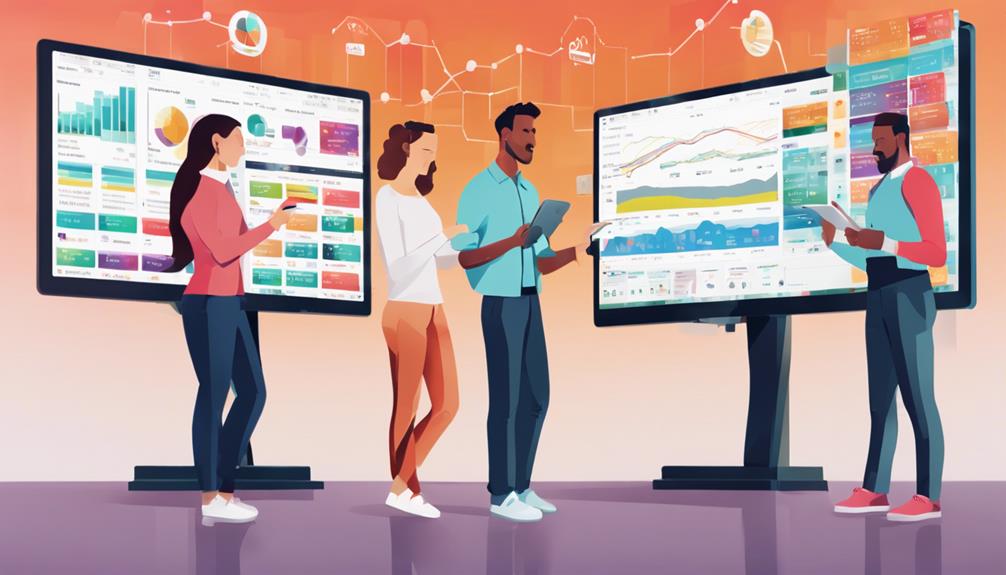
To effectively enhance your retail strategy, advancing employee performance metrics is crucial. By leveraging the latest POS analytics, you can gain deeper insights into how your staff performs, which in turn boosts productivity and sales. Here's how you can make it happen.
First, you'll want to integrate real-time analytics into your POS system. This allows you to monitor employee activities and sales data instantaneously. You'll see who's upselling effectively, who's excelling in customer service, and who might need more training. Recognizing high performers not only motivates your team but also sets a benchmark for success.
Next, consider setting up personalized performance dashboards. These dashboards provide your employees with direct feedback on their sales metrics, customer interactions, and even time management. It's a proactive way to encourage self-improvement and accountability.
Furthermore, use POS analytics to schedule staff more efficiently. Analyzing peak sales periods and aligning your best staff to these times maximizes sales opportunities and customer satisfaction. It also prevents burnout by ensuring fair distribution of busy shifts.
Implementing Enhanced Security Features
Enhancing your POS system with advanced security features is essential to safeguard your retail operations from fraud and data breaches. As you move into 2024, it's crucial to stay ahead of potential threats by adopting the latest in encryption technology and multi-factor authentication (MFA).
These measures ensure that your customer's sensitive data, such as credit card information and personal details, remain secure from unauthorized access.
You'll also want to implement real-time monitoring and alerts. This proactive approach not only detects unusual activities that could indicate a security breach but also helps you respond swiftly to mitigate any damage.
Integrating AI-driven security protocols can further enhance this process, learning from each transaction to better identify and react to anomalies in the future.
Don't overlook the importance of regular software updates and compliance with global security standards. These are your best defenses against emerging cyber threats.
Ensure that your POS provider offers continuous updates and supports the latest security compliance requirements.
Adopting these advanced security features won't only protect your business but also build trust with your customers, knowing their transactions are secure.
Staying updated with these trends is more than a necessity; it's a strategic advantage in the competitive retail landscape.
Frequently Asked Questions
How Do POS Analytics Impact Small Versus Large Retailers Differently?
POS analytics help you understand customer behaviors differently. For small retailers, it's about personalizing service and inventory efficiency. Large retailers use it for broader trends and optimizing logistics across numerous locations. Both aim for growth.
What Are the Initial Costs for Setting up Advanced POS Analytics?
You'll find that initial costs for setting up advanced POS analytics can vary. They depend on the scale of your operations and the complexity of the system you choose. Expect a significant investment upfront.
Can POS Analytics Help in Reducing Business Operational Costs?
Yes, POS analytics can help you reduce operational costs by identifying inefficiencies and optimizing inventory and staffing. You'll save money by better managing resources and improving overall business processes.
What Training Is Required for Employees to Use New POS Systems?
To use new POS systems, you'll need training in basic operations, data analysis, and customer management. It's also essential to understand any specific software updates or hardware integrations unique to your system.
How Do Seasonal Trends Affect the Accuracy of POS Analytics?
Seasonal trends can skew your POS analytics, as sales peaks and troughs aren't consistent year-round. You'll need to adjust forecasts and understand these patterns to maintain accuracy in your data analysis.
Conclusion
As you gear up for 2024, leverage these POS analytics trends to transform your retail strategy. By harnessing real-time data and integrating AI, you'll predict trends more accurately and optimize your inventory. Personalize promotions and enhance customer experiences to boost your sales. Don't overlook the power of cross-channel insights and advanced employee metrics to refine your operations. Plus, with improved security features, you'll protect your data while staying ahead. Dive into these trends and watch your retail business soar.
Related articles: What Are the Latest Trends in POS Sales Reporting? · Top 3 Trends in POS Sales Reporting Analysis · Latest Trends in POS System Sales Reporting